
Table of Contents
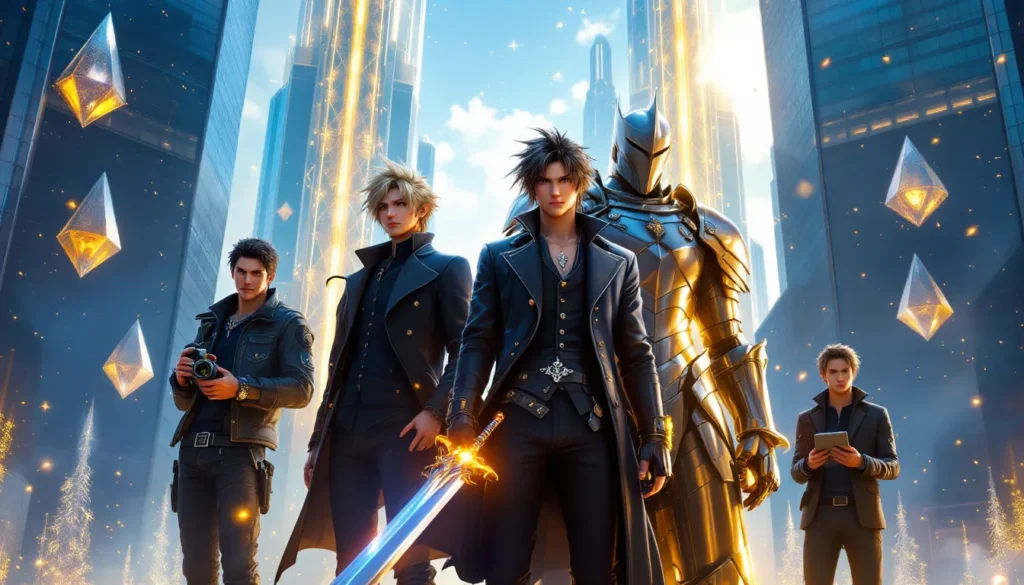
ToggleFinal Fantasy 15 introduced one of the most compelling ensemble casts in the franchise’s history. Unlike many JRPGs where the protagonist shoulders the narrative weight alone, FF15’s strength lies in the relationships between Noctis and his lifelong companions. This isn’t just about four dudes on a road trip, it’s about how their bond shapes everything from combat mechanics to story beats. Whether you’re replaying the base game, tackling the DLC episodes, or just curious about what makes these characters tick, understanding each party member’s role, abilities, and development is crucial to appreciating what Square Enix built here. Let’s break down the Royal Family and their allies, from their combat styles to their personal struggles.
Key Takeaways
- Final Fantasy 15 characters shine through their interconnected relationships and party chemistry, with Noctis’s journey from reluctant prince to reluctant king shaped by his bond with Gladiolus, Ignis, and Prompto.
- Noctis combines versatile weapon-switching and the signature Armiger ability to summon royal weapons, rewarding aggressive and mobile combat styles through abilities like Warp Strike and phasing mechanics.
- Each Final Fantasy 15 character serves a distinct combat role—Gladiolus as the tank and physical damage dealer, Ignis as the strategic tactician and support specialist, and Prompto as the consistent ranged damage dealer—making the party complementary rather than replaceable.
- Character development in FF15 extends beyond individual arcs to mechanical integration: Ignis adapts after blindness, Gladiolus temporarily leaves the party forcing growth, and Lunafreya’s tragic oracle role adds emotional weight to the narrative ecosystem.
- The game’s DLC episodes and supporting characters like Ardyn and Aranea prove that FF15’s depth comes from treating every character as necessary to the narrative, rather than using one-dimensional archetypes.
Noctis Lucis Caelum: The Reluctant King and Main Protagonist
Character Background and Role in the Story
Noctis is the crown prince of Lucis, thrust into an impossible situation from day one. He’s not your typical chosen one, he’s a kid who wanted to escape royal duty, take a road trip with his best friends, and marry Luna, the woman he barely knows. The opening hours show a bratty teenager uncomfortable with destiny, and that tension between duty and desire drives his entire arc.
The story unfolds as Noctis discovers that he’s the last heir to the Crystal and the only one capable of wielding the power of the kings of old. He’s forced to watch his father die, his kingdom fall to darkness, and his entire world crumble in the span of a few hours. By the game’s end, he’s made peace with sacrifice, a sobering transformation that makes the finale hit harder than most final boss sequences in gaming.
Combat Abilities and Weapon Mastery
Noctis is the jack-of-all-trades when it comes to combat. His signature mechanic is Armiger, which summons all his royal weapons simultaneously and gives him temporary invincibility frames and enhanced damage output. This ability is essential for boss fights and tough encounters.
What sets Noctis apart is his weapon-switching system. Unlike other party members locked into specific gear, Noctis can equip swords, greatswords, spears, guns, shields, and even royal arms mid-combat. His DPS scales with your gear setup and ability level.
Key combat features:
- Warp Strike: Teleport to enemies and deal damage, core mobility and DPS tool
- Phasing: Dodge mechanic that becomes second nature in high-level play
- Royal Arms: Powerful weapons tied to Lucian kings, used in Armiger and special abilities
- Magic casting: While not his primary strength, Noctis can cast spells via items found throughout the world
His playstyle rewards aggression and smart positioning. Experienced players can chain Warp Strikes across entire enemy groups, making him feel like an unstoppable force once you master the timing.
Character Development and Relationships
Noctis’s character arc isn’t a traditional hero’s journey. He starts privileged, ignorant of the world beyond his bubble, and selfish. By the end, he’s learned sacrifice through his bond with his companions. Every story beat, from losing Regis, to watching Prompto’s existential crisis unfold, to accepting Luna’s death, shapes who he becomes.
His relationship with each party member defines his growth:
- Prompto: His oldest friend represents nostalgia and innocence. Watching Prompto struggle with his origins forces Noctis to confront uncomfortable truths.
- Ignis: The strategist and older brother figure. When Ignis loses his sight, Noctis realizes he can’t protect everyone, no matter how powerful he becomes.
- Gladiolus: The shield. Their relationship is tested when Gladiolus temporarily leaves the party, forcing Noctis to understand that strength isn’t just about power.
- Lunafreya: A tragic love built on duty, not genuine connection. Their romance works precisely because it’s complicated and eventually futile.
Noctis doesn’t save the world through pure heroism, he does it through accepting his companions’ sacrifices and carrying the weight they bear. That’s what makes him resonate with players.
Prompto Argentum: The Enthusiastic Photographer and Sharpshooter
Background and Character Arc
Prompto is the party’s photographer and ranged damage dealer. He’s enthusiastic, optimistic, and constantly documenting the road trip with his camera. He’s also a Niflheim infantry soldier, implanted with daemon essence as a child, a revelation that hits like a ton of bricks during the story’s second half.
This twist recontextualizes everything. Prompto was never supposed to be Noctis’s friend: he was placed alongside him as a spy. The fact that he genuinely cares about his companions even though his origins is what makes his arc so powerful. Unlike typical “secretly evil” character reveals, Prompto chooses his friends over his creators, and that choice costs him.
Combat Style and Technical Skills
Prompto fights from range using gunbreaker-style dual firearms. His damage output is lower than Gladiolus but more consistent, and his ability to hit enemies from a distance makes him invaluable against flying foes and ranged attackers.
Key combat mechanics:
- Gun-Fu: His signature ability chain that unleashes rapid-fire combos
- Piercer: Focused shot that can interrupt enemy attacks
- Trigger Happy: Area-of-effect ranged attack useful for clearing mobs
- Linkstrikes: Co-op attacks triggered when positioned near Noctis
Prompto’s strength isn’t raw damage, it’s consistency and crowd control. He keeps pressure on enemies while you manage other threats. His technical skills also extend to the game’s survival mechanics: he’s the party’s designated tech guy, meaning he carries crucial items and can unlock certain equipment caches.
Ignis Stupeo Scientia: The Strategic Tactician and Chef
Role in the Party and Strategic Importance
Ignis is the strategist and support specialist. Unlike other JRPGs where support feels passive, FF15 makes Ignis indispensable. His Analyze ability reveals enemy weaknesses and resistances, directly informing your tactical decisions. Without Ignis’s intel, you’re fighting blindly.
Beyond combat, Ignis is the party’s chef. Whenever you rest at camp, Ignis cooks meals that provide stat buffs and status resistances for the next battle. The better your ingredients, the better your buffs, creating a light resource management loop that encourages exploration and hunting.
His story arc reaches its climax when he’s blinded during a tragic encounter. The party doesn’t bench him: instead, Ignis adapts and continues fighting even though his handicap. This moment crystallizes FF15’s theme: companionship means carrying each other’s burdens, not abandoning them when they become inconvenient.
Abilities, Techniques, and Support Functions
Ignis’s combat toolkit is built around utility and tactical advantage:
- Analyze: Reveals enemy HP, weaknesses, and resistances, critical for strategy
- Enhancement spells: Buffs party members with stat increases and debuff immunity
- Regroup: Repositions the party for better positioning
- Overwhelm: Multi-hit ability chain that builds damage through consistent hits
- Knife mastery: Uses daggers and short blades for quick, precise strikes
Post-blindness, Ignis’s abilities don’t change mechanically, but his flavor text and animations shift to reflect his new reality. It’s a brilliant touch that honors his character development without forcing the player to relearn his role.
His support functions extend beyond combat. Ignis’s cooking system ties directly to resource management, finding rare ingredients becomes a side objective that feels organic rather than mandatory. This interconnectedness is what separates FF15’s party dynamics from more traditional JRPG structures.
Gladiolus Amicitia: The Loyal Protector and Powerhouse
Character History and Relationship With Noctis
Gladiolus is the oldest member of the party and Noctis’s protector, literally his duty as a member of the Glaive. He’s been assigned to protect the prince since childhood, but their bond runs deeper than obligation. Gladiolus genuinely cares about Noctis, even when that care manifests as tough love and relentless ribbing.
Their relationship is tested during the story’s midpoint when Gladiolus leaves the party to undergo training. This absence forces both characters to grow: Noctis learns he can’t rely on Gladiolus’s strength indefinitely, and Gladiolus returns stronger but with a clearer understanding of what his role actually means. It’s character development disguised as a roster change.
Combat Strengths and Weapon Preferences
Gladiolus is the party’s primary tank and physical damage dealer. He wields greatswords and heavy weapons, deals the most raw damage, and can absorb punishment that would kill anyone else. His playstyle is straightforward: stand in front, hit things hard, survive.
Key combat features:
- Bladeplay: Multi-hit ability chain with massive damage potential
- Tempest: Spinning area attack that catches multiple enemies
- Chamberlain: Shield ability that reduces incoming damage
- Raging Titan: Ultimate ability that transforms him into a nigh-unstoppable force
Gladiolus’s strength comes online mid-game and peaks in post-game content. Early-game, his heavy weapons swing slower than Noctis’s versatile arsenal, but once you upgrade his gear and reach higher levels, his damage output becomes oppressive.
His loyalty to Noctis isn’t just character flavor, it manifests mechanically. When Noctis takes damage, Gladiolus occasionally steps in to block it, essentially acting as an additional health pool. This passive protection rewards players who’ve invested in party chemistry.
Lunafreya Nox Fleuret: The Oracle and Tragic Love Interest
The Oracle’s Powers and Divine Role
Lunafreya is the Oracle of Eos, tasked with blessing the gods and maintaining the world’s spiritual balance. Her power isn’t about combat prowess, it’s about her connection to the divine. Throughout the game, she performs rituals that literally shape the story and world state, healing the land and fighting daemon corruption from a spiritual plane.
Her abilities center on summoning and divine magic. When Lunafreya uses magic, it carries weight and consequence, these aren’t quick spellcasts but major events that move the narrative forward. She’s the counterbalance to Noctis’s raw power: where he wields swords, she wields faith and prophecy.
Story Significance and Character Depth
Lunafreya’s story is a tragedy that’s easy to miss if you’re not paying attention. She’s been betrothed to Noctis since childhood, but they barely know each other. The game wants you to care about their romance, but it wisely avoids making that romance the center of the narrative, instead, it’s one thread in a larger tapestry about duty, sacrifice, and the cost of saving the world.
Her ultimate fate is predetermined by her role as Oracle. She’s doomed by her own power and her commitment to the kingdom. Unlike Noctis, who has companions to share his burden, Lunafreya carries hers mostly alone. Her final moments, performed off-screen and revealed through cutscenes, hit harder because we’ve spent the entire game watching her work toward an inevitably tragic conclusion.
Lunafreya doesn’t join the main party as a playable character, but the DLC episodes (particularly Episode Lunafreya) give her the spotlight she deserves. Her character reminds players that FF15’s strength isn’t just its four-man party, it’s the entire world of Eos and everyone whose lives intersect with Noctis’s journey.
Regis Lucis Caelum and The King’s Legacy
Regis, Noctis’s father, is dead before the game even starts, yet his presence defines the entire narrative. He was the King of Lucis, wielder of the Crystal, and the last line of defense against darkness. His death in the opening act isn’t a plot device, it’s the catalyst for everything that follows.
Regis represents the generation before Noctis, burdened by the same duty and sacrifice. He spent decades protecting his kingdom and holding back the darkness, knowing it would eventually claim his life. The game reveals, through flashbacks and codex entries, that Regis knew his death was coming. He prepared Noctis not through coddling but through tough love and difficult lessons.
Their relationship is more complex than it first appears. Noctis resented his father’s duty and the pressure it placed on him, but Regis’s death forces Noctis to understand that his father wasn’t cruel, he was preparing his son for an impossible burden. The DLC episode “Episode Ardyn” provides crucial context about Regis’s final moments and his deal with the divine.
Regis’s legacy lives through Noctis. Every ability Noctis gains, every Armiger summon, every choice made, they’re all standing on the foundation Regis built. Understanding the King’s role makes Noctis’s journey feel less like a teenager’s coming-of-age story and more like the final chapter of a generational saga.
Secondary and Supporting Characters Worth Knowing
Ardyn Izunia and His Mysterious Agenda
Ardyn is the game’s main antagonist, but his role is far more nuanced than typical villain tropes. He’s not motivated by power or conquest, he’s driven by revenge against the Lucian bloodline. His manipulation of events throughout the game works because he understands Noctis and his companions better than they understand themselves.
Ardyn’s backstory is devastating. He was once a healer, capable of curing daemon blight, but was rejected by the Lucian throne and left to become a daemon himself. Everything he does, every obstacle he places in Noctis’s path, is designed to hurt the royal family the way he was hurt. He’s not evil: he’s wounded, and that wound has festered for centuries.
What makes Ardyn compelling is that he’s right about certain things. The Lucian throne isn’t benevolent: it’s built on selective compassion and convenient righteousness. Ardyn forces players to confront moral ambiguity in a franchise known for clear good-versus-evil narratives. His final confrontation with Noctis isn’t a battle of heroes and villains, it’s the meeting of two broken people, one who survived his pain and one who couldn’t.
Players exploring Japanese gaming narratives will recognize Ardyn as exemplary character writing. He’s the antithesis of one-dimensional villainy.
Aranea Highwind and the Empire’s Interests
Aranea is a Niflheim dragoon and one of the game’s most interesting supporting characters. She’s a mercenary motivated by profit and survival, not ideology. Unlike the imperial leadership, Aranea has no attachment to the war with Lucis, she’s simply doing her job.
Her interactions with the party are surprisingly genuine. She respects strength and competence, and she doesn’t view Noctis and his companions with the contempt most imperial soldiers show. When circumstances force her to work with them, she does so professionally and eventually extends grudging friendship.
Aranea’s character proves that gaming guides covering party dynamics need to examine even peripheral characters. She represents the gray space between the game’s binary conflict. She’s not redeemed through a dramatic heel-turn: instead, she gradually develops respect for the party through repeated interaction and mutual survival.
Her presence also highlights FF15’s narrative depth. A lesser game would make every imperial soldier interchangeable. FF15 takes the time to show that even soldiers on the “wrong” side are people with their own motivations and codes of honor.
Character Dynamics and Party Chemistry
Final Fantasy 15’s greatest achievement is how it makes four party members feel genuinely interconnected. Unlike games where you swap characters based on utility, FF15 creates dynamic interactions that reward players for keeping the same party composition throughout.
The dialogue system reflects this. The party members constantly banter, comment on each other’s abilities, and react to story events with unique voice lines. Gladiolus ribbing Prompto about his camera, Ignis offering strategic advice, Noctis responding to their input, it all builds a sense that these four have history and genuine affection for each other.
Combat chemistry goes deeper. Linkstrikes (co-op attacks) trigger when party members sync, encouraged through positioning and ability choices. The more you play together, the more these moments occur, and each successful Linkstrike feels like a payoff for maintaining party cohesion. This mechanical incentive mirrors the narrative’s emphasis on the strength of their bond.
Party camping scenes are where the magic happens. When you set up camp to rest and recover, cutscenes play out showing the party members interacting during downtime. These moments, cooking together, sharing stories, ribbing each other about romance, are pure character development. They don’t advance the plot, but they deepen emotional investment in a way mandatory story scenes often fail to do.
The game respects player agency here. You’re not forced to watch these scenes, but missing them means losing crucial character moments. Party dynamics in modern gaming rarely reach FF15’s level of integration between narrative, character development, and mechanical reward.
When Gladiolus leaves temporarily, the party feels incomplete. When Ignis is blinded, the group’s dynamic shifts. These aren’t just story beats: they’re fundamental changes to how the party functions that force players to adapt. It’s seamless design that treats character relationships as more important than gameplay systems.
Conclusion
Final Fantasy 15 lives and dies by its cast. The four-man party, the supporting cast, and even the antagonists create a narrative ecosystem where every character feels necessary. Noctis’s journey from reluctant prince to reluctant king is only meaningful because his companions carry him through his darkest moments.
Understood individually, each character has strengths and weaknesses. But FF15’s genius is in showing how they function as a unit. Noctis is powerful, but he’s incomplete without Gladiolus’s protection, Ignis’s strategy, and Prompto’s unwavering friendship. That interdependence, both mechanically and narratively, is what separates FF15 from countless other JRPGs.
Whether you’re optimizing a high-level hunt, role-playing through your first playthrough, or just appreciating the character writing, understanding these characters transforms FF15 from a good game into an exceptional one. They’re why players still talk about this game years after release, still debate character moments, and still feel emotional beats that hit hard. That’s the mark of characters worth knowing.


