
Table of Contents
ToggleCrystals are the beating heart of the Final Fantasy universe. Whether you’re diving into the original 8-bit classics or exploring the latest AAA releases, these luminous shards shape everything, from character progression to world-altering narratives. They’re not just MacGuffins collecting dust in cutscenes: they’re mechanical anchors, thematic cornerstones, and the literal source of magic and civilization across dozens of worlds. If you’re serious about understanding Final Fantasy lore or optimizing your gameplay, you need to know what crystals are, how they work, and why they matter. This guide breaks down final fantasy crystals across generations, explaining their mechanics, narrative weight, and practical applications in 2026.
Key Takeaways
- Final Fantasy crystals are fundamental to both gameplay mechanics and narrative storytelling, functioning as elemental energy sources, progression gates, and metaphysical anchors that define entire worlds across the franchise.
- Crystal mechanics have evolved dramatically from simple collectible objectives in 8-bit classics to complex systems—such as materia synthesis in FF VII Remake and crystal farming in FF XIV—that demand specific strategies for optimal gameplay.
- Crystals serve as primary narrative drivers in major Final Fantasy plotlines, with their collection and usage directly triggering story beats, character development, and moral dilemmas about power and consequence.
- Rare final fantasy crystals require targeted hunting strategies specific to each title, from shard collection in FF V to magicite drops in FF VI to high-level shop purchases in FF VII Remake.
- Modern FF titles approach crystals with narrative subtlety, exploring themes of control, destiny, and planetary consequence rather than treating them as simple fetch-quest objectives.
- Understanding your specific game’s crystal system—whether it’s job class unlocking, elemental matchups, or crafting materials—separates casual progression from optimized endgame performance.
What Are Final Fantasy Crystals?
Final Fantasy crystals are mystical gems that exist at the intersection of gameplay mechanics and storytelling. They’re not decorative, they’re fundamental.
At their core, crystals represent elemental energy, life force, or divine power depending on the game’s universe. In some titles, they’re the literal foundation of the world. In others, they’re portable sources of magic that characters can use to enhance abilities, summon creatures, or unlock hidden potential. Think of them as the Final Fantasy equivalent of elemental stones mixed with ancient artifacts.
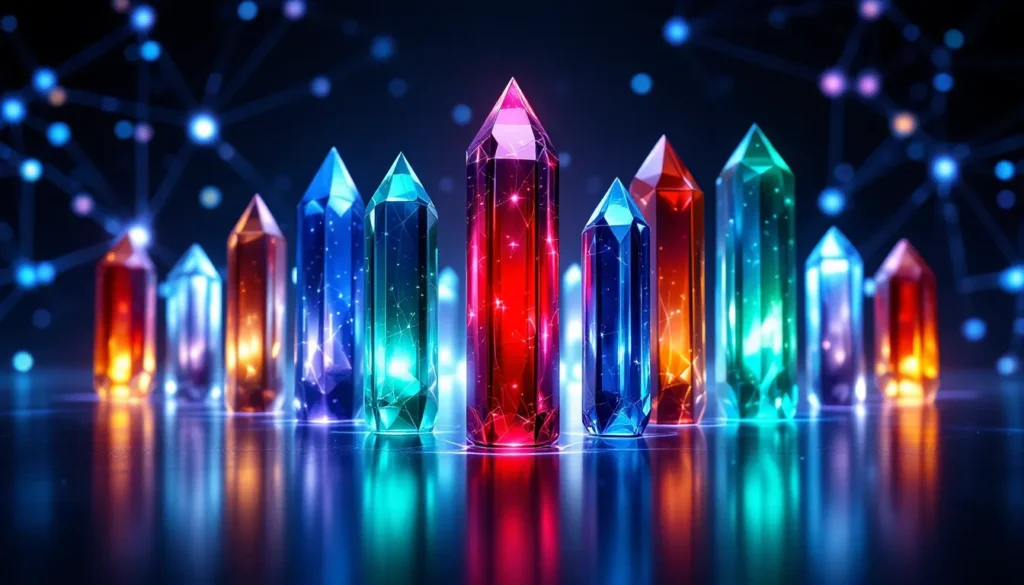
Visually, crystals appear as glowing gemstones, often shaped like shards or towers. Their color typically corresponds to their elemental alignment, blue for water, red for fire, green for earth, and so on. This consistency across the franchise makes them instantly recognizable to any FF veteran.
What makes crystals distinct from other gaming collectibles is their dual nature. They’re never purely cosmetic. Whether it’s gaining access to new spells, powering city-wide infrastructure, or triggering major story beats, crystals drive both player progression and narrative momentum. This integration is what separates Final Fantasy worldbuilding from standard fantasy games.
The Role Of Crystals Across Different Final Fantasy Games
Crystals don’t work the same way across every Final Fantasy title. The franchise has evolved dramatically over three decades, and crystal mechanics have shifted alongside it.
Crystals In Classic Final Fantasy Titles
In the original Final Fantasy (1987) and its sequels FF II and FF III, crystals serve as the primary narrative objective. The party must collect them to restore the world’s balance and defeat the darkness threatening civilization.
FF IV introduced a more sophisticated approach: crystals as sources of elemental summons. Players gained access to powerful creatures tied to specific crystal elements, adding strategic depth to combat. The Red Moon summon and lunar-themed crystals became iconic to that entry.
FF V (1992) took a legendary approach with the Crystal Shards. Four elemental crystals shattered into fragments, and the party collected them across the world, each shard granting new job classes. This mechanic directly tied crystal collection to character customization, something revolutionary for 1992.
FF VI (1994) used Magicite crystals as the magic system itself. Players equipped magicite to learn spells permanently, and rare magicite pieces provided game-changing status boosts. Finding rare magicite like Phantom or Crusader became a hunt within itself.
Crystals In Modern Final Fantasy Installations
Modern FF titles approach crystals with more narrative subtlety. Final Fantasy VII Remake (2020) reimagined the Materia system, spheres infused with crystal energy that grant magic and summons. The focus shifted from collecting raw elemental stones to managing a robust loadout system. Every materia feels purposeful, with synergy between different materia effects.
Final Fantasy XV (2016) used crystal fragments as a progression mechanic tied to Noctis’s personal journey. Collecting crystal shards unlocked royal arms, powerful weapons locked behind lore-heavy dungeons. The crystals weren’t just gameplay gates: they were narrative waypoints connecting Noctis to his bloodline.
In Final Fantasy XIV (2010, A Realm Reborn 2013), crystals transform the entire world. Aether, crystalline energy, forms the basis of magic, crafting, and the fundamental structure of multiple worlds. Players harvest crystals from defeated enemies and elemental phenomena, then transmute them into crafting materials. The 6.0 expansion Endwalker (2021) made crystals central to the climactic storyline, with aspects of light and dark crystals shaping the entire conflict.
FF XVI (2023) brought crystalline essence into the forefront through Eikon (summon) powers tied to crystals. The Dominants, humans channeling eikon power, serve a narrative function entirely dependent on crystal manipulation.
How Crystals Function In Gameplay And Combat
Understanding crystal mechanics means understanding how FF titles gate power progression. Crystals aren’t just flavor: they’re your pathway to growth.
Crystal Mechanics And Leveling Systems
Crystals function differently depending on the game, but the core principle is consistent: they unlock or enhance abilities.
In FF V, obtaining a crystal shard instantly grants access to a new job class. The Ninja, Bard, and Blue Mage jobs were locked behind crystal acquisition. This meant crystal hunting wasn’t optional, it was progression gating. Speedrunners of FF V still hunt specific shards early because certain jobs trivialize later dungeons.
FF VII Remake treats materia as crystalline vessels for magic. Equipping a Fire Materia grants fire spells scaled to that materia’s level. Leveling happens through combat use, meaning your crystal materia must be actively slotted and used to progress. Swapping materia mid-fight is tactically viable, making crystal selection a real-time decision.
In FF XIV, crystals are the raw material for progression. Defeating enemies drops elemental crystals (fire, ice, wind, etc.). These feed into the Crafting and Gathering systems. A Weaver uses crystals to create better gear. A Miner uses them to enhance tools. No crystals, no advancement. This integration means farming crystals feels purposeful across playstyles.
FF XV gates powerful abilities behind crystal shards hidden in hard-to-reach dungeons. Each shard unlocks a specific royal arm, a legendary weapon tied to Noctis’s ancestors. Collecting all 13 royal arms requires defeating challenging enemies and solving environmental puzzles.
Elemental Affinities And Strategic Advantages
Elemental typing matters in most FF titles, and crystals define those matchups.
In FF VI, equipping a Fire Magicite grants fire-aligned spells. More crucially, it also determines what element a spell caster becomes when morphed, changing stat distributions and resistances. A character equipped with water magicite becomes frost-aligned, resisting ice but taking more fire damage.
FF VII Remake expanded this with linked materia. Slotting a Lightning Materia in a weapon linked to a Reprieve Materia (which reduces status ailments) creates synergy. Hitting enemies with lightning leaves them vulnerable to status effects. High-level play in Remake revolves around materia loadout optimization.
In FF XIV, elemental crystals determine crafting properties. Crafting with High Fire Crystals versus High Water Crystals produces different gear qualities. Tough fights require specific elemental resistances, and those resistances scale with crystal-infused gear. Endgame Savage raids demand perfectly optimized crystalline loadouts.
FF XVI introduced Eikon Clash mechanics where elemental matchups matter. Dominant characters with fire-aligned crystals deal increased damage in specific scenarios. Understanding crystal elemental affinities becomes crucial for ‘Hard’ and ‘Infernal’ difficulty playthroughs. Recent game guides on combat optimization break down these crystal matchups in detail.
Crystal Lore And Narrative Significance
Beyond mechanics, crystals are the metaphysical spine of Final Fantasy storytelling. They’re not background flavor, they’re existential.
The Spiritual And Metaphysical Aspects Of Crystals
Crystals in Final Fantasy represent order, balance, and divine structure. They’re fragments of the world’s soul.
In FF I-III, the Light Warriors’ entire purpose centered on crystal restoration. The narrative wasn’t “save the princess”, it was “restore the four elemental crystals to prevent the world’s apocalypse.” Crystals were presented as sacred, ancient repositories of planetary stability.
FF IV deepened this with the concept of crystal-forged weapons and the relationship between crystals and celestial bodies. The Red Moon contained its own crystal essence, suggesting that crystals exist on multiple planes simultaneously. This metaphysical layer made collecting them feel spiritually significant, not just mechanically necessary.
FF VII Remake reframed materia (crystallized Lifestream energy) as both gift and curse. Using magic depletes the planet’s essence. Overusing materia weakens the world itself. This created narrative tension: becoming stronger magically makes you complicit in planetary degradation. It’s a subtle but powerful commentary on power and consequence.
In FF XIV: Shadowbringers (2019), crystals took on cosmological weight. The First (a sundered world) was flooded in Light-aspected crystal energy, corrupting reality itself. The story hinged on understanding that crystals aren’t neutral, they’re forces of creation with catastrophic potential when unbalanced.
Crystals As Story Drivers In Major Plotlines
Many Final Fantasy plots wouldn’t exist without crystals serving as narrative catalysts.
FF V’s entire conflict stems from crystal shattering. The Exdeath antagonist sought to destroy crystals to merge multiple worlds. The main cast’s journey was reactionary, chasing crystal fragments across a fractured globe. Without the crystal mechanic, there’s no FF V story structure.
In FF X (2001), the Farplane, literally a crystalline dimension, served as the literal underworld. The summoning system relied on crystalline manifestations of the dead. The plot twist that dreamed summoned creatures were forged from crystal essence recontextualized the entire magic system.
FF XIII (2009) built its narrative entirely around crystal mythology. Civilians turned into Crystallized (Cieth) beings by the goddess Etro. The main party’s conflict wasn’t against a traditional villain, they were fighting an predetermined crystal-forged destiny itself. Literally, they were trying to shatter their crystal-determined fate.
FF VII Remake made materia central to understanding Cloud’s identity. The Jenova cells coursing through Cloud’s body contain crystallized Lifestream. His access to certain materia ties directly to that corruption. The story explores whether his power is his own or something imposed by external crystal force. Recent discussions on JRPG narrative design highlight how FF Remake weaponized crystal mythology for character development.
FF XVI structured its entire plot around Eikon crystals. The tragic backstory, the dominants’ servitude, the world’s fragmentation, all traced back to misuse of crystalline eikon power. The final conflict hinged on Clive’s ability to transcend his crystal-bound limitations.
Collecting And Optimizing Crystals: Practical Strategies
Knowing crystal lore is one thing. Actually obtaining rare crystals and maximizing their effectiveness is another entirely.
Where To Find And Obtain Rare Crystals
Crystal locations vary wildly by title, but certain patterns emerge.
In FF V, crystal shards are story-gated. You’ll obtain them naturally through progression, but side areas contain bonus shards offering optional job classes early. The Mirage Tower contains hidden shards if you’re willing to navigate a brutal gauntlet. Speedrunners prioritize these early shards because they unlock game-breaking job combinations.
FF VI hides magicite everywhere: treasure chests, enemy drops, shop purchases. Rare magicite like Phantom appears as random drops from specific enemies in the Floating Continent. Crusader magicite requires defeating a superboss in the World of Ruin. Completionists spend hours hunting rare magicite because combining them grants permanent stat upgrades.
In FF VII Remake, materia (crystalline magic) comes from multiple sources:
- Enemy drops from defeated foes
- Shop purchases from boutique vendors
- Hidden materia in destructible crates and environmental searches
- Challenge rewards from combat trials
Rare materia like Revive and Deadly Assess require either high-tier shop purchases or grinding specific enemy encounters repeatedly. Cloud’s signature Summon materia (Knights of the Round equivalent in the original) remains locked behind a secret boss in the expanded Intermission episode.
FF XIV has structured crystal farming:
- Casual players harvest crystals from defeated overworld enemies
- Crafters and gatherers farm specific elemental crystals via their class quests
- Hardcore players run daily Roulette dungeons for guaranteed crystal drops
- Endgame raiders farm Savage raids for guaranteed high-grade crystalline gear
Newest game announcement coverage on Japanese releases often highlights new crystalline content availability.
FF XV places royal arm crystals in optional dungeons scattered across the open world. Pitioss Ruins hides a crystal requiring navigating a brutal platforming dungeon. Daurell Caverns demands defeating Ifrit. Each location telegraph’s its difficulty, so ambitious players can hunt them immediately.
Upgrading And Enhancing Your Crystal Arsenal
Obtaining crystals is half the battle. Upgrading them determines viability in late-game content.
In FF VI, Magicite fusion was end-game optimization. Equipping two magicite simultaneously amplified their effects. Certain magicite combinations granted permanent stat boosts or immunity to status conditions. Discovering optimal fusion paths required experimentation and community knowledge sharing.
FF VII Remake introduced Materia leveling through combat use. A level-1 Fire Materia becomes stronger the more you cast spells using it. Duplicating materia through synthesis creates multiple copies of powerful materia for different weapon loadouts. Late-game builds require duplicating Revive and healing materia across all party members, a grinding task but mandatory for Hard difficulty.
FF XIV uses Materia melding. Crafters can embed stat-boosting materia into gear through melding. Overmelding (adding more materia than slots allow) has a fail chance but grants huge stat bonuses. Hardcore raiders optimize their materia melds to squeeze every stat point before facing Savage content.
FF XV doesn’t offer traditional crystal upgrades, but weapon enhancement parallels the concept. Upgrading weapons requires specific materials that share the same scarcity as crystal shards. Hunting rare crystals feels similar to hunting rare crafting materials, both are endgame grinding objectives.
The optimization process separates casual players from committed ones. Casual players grab available crystals and move forward. Dedicated players farm specific crystal combinations, optimize loadouts, and exploit synergies between different crystalline powers.
The Evolution Of Crystals In Final Fantasy
Crystals have evolved dramatically since the 8-bit era. Tracking that evolution reveals how Final Fantasy itself has changed.
In the 8-bit and 16-bit eras (1987-1994), crystals were simple story devices. Collect four elemental crystals, defeat the darkness, save the world. Mechanically, they gated access to summons or job classes. Narratively, they were sacred artifacts representing worldly order. The metaphor was straightforward: civilization requires elemental balance.
The PlayStation era (1997-2001) introduced nuance. FF VII introduced Materia as portable crystal energy, this shifted crystals from ancient relics to everyday magical infrastructure. FF VIII (1999) abandoned crystals entirely for the Guardian Force system. FF IX (2000) returned to classic crystal aesthetics but treated them more as thematic echoes than mechanical pillars. FF X reinvented them as the summon system’s core.
The HD era (2006-2015) fragmented the crystal concept. FF XIII made crystals literally transformative (turning people into crystalline beings). FF XIV made crystals the fundamental unit of crafting economy. FF XV approached them as gated legendary weapons. No unified vision, but each interpretation felt intentional.
In 2020 onward, crystals became narrative tools exploring themes of control and destiny. FF VII Remake’s materia represents stolen planetary essence. FF XVI’s eikon crystals symbolize forced power and servitude. Rather than simple collectibles, modern FF treats crystals as morally weighted objects worthy of philosophical exploration.
The shift reflects gaming’s evolution. Early FF could getaway with simple fetch-quest narratives. Modern FF assumes players want complexity, mechanical depth, narrative texture, thematic weight. Crystals adapted accordingly.
Fans debating crystal mechanics across different franchises often note that Final Fantasy’s willingness to recontextualize crystals every few games demonstrates creative courage. Some titles make crystals central. Others deprioritize them. Few franchises attempt such bold reinterpretation of core mythology.
Conclusion
Final Fantasy crystals are deceptively complex. They’re collectibles, power sources, narrative devices, and thematic anchors simultaneously.
Understanding crystals means understanding Final Fantasy itself, a franchise unafraid to rebuild its foundational mythology every few entries while maintaining thematic coherence. Whether you’re hunting rare magicite in FF VI, optimizing materia loadouts in FF VII Remake, or farming elemental crystals in FF XIV, the core principle remains: crystals bridge gameplay progression with narrative purpose.
The practical takeaway: research your specific FF title’s crystal system before diving deep. FF V requires hunting shards for optimal job placement. FF XIV demands crystal farming for crafting and raids. FF VII Remake needs materia synthesis planning. Each demands different strategies.
But the deeper lesson? Crystals matter because they represent where gameplay and story merge. They’re why Final Fantasy resonates across generations. That combination of mechanical depth and narrative weight isn’t accidental, it’s the franchise’s defining strength. Respect the crystals, and they’ll unlock worlds worth exploring. Get those deep dives on Final Fantasy lore for even more insights. And if you haven’t experienced the iconic narrative journey of Final Fantasy VII, the reimagined entries showcase modern crystal storytelling at its finest. Keep grinding, keep exploring, and let the crystals guide your journey.


