
Table of Contents
ToggleFinal Fantasy Tactics: War of the Lions stands as one of the most celebrated tactical RPGs ever created, and for good reason. Released initially in 1997, then reimagined with the PSP port in 2007, this game delivered a level of strategic depth and storytelling that rivals anything in the genre. The War of the Lions remake didn’t just polish the visuals, it overhauled mechanics, expanded the narrative, and introduced features that made an already phenomenal game feel almost entirely new.
Whether you’re tackling Ivalice for the first time or returning after years away, mastering Final Fantasy Tactics requires more than button-mashing and luck. The game demands tactical thinking, smart team composition, and an understanding of how job classes, abilities, and positioning interact. This guide covers everything from the fundamentals to advanced strategies that’ll help you crush even the toughest battles and uncover the game’s hidden secrets.
Key Takeaways
- Final Fantasy Tactics: War of the Lions demands tactical thinking beyond stats—positioning, terrain advantages, and ability synergies are essential to mastering even the toughest battles.
- The flexible job class system allows cross-training and hybrid builds, enabling unconventional strategies like Paladins using healing spells that wouldn’t work in other RPGs.
- Smart team composition balances offense, defense, healing, and utility; a functional early-game party typically includes a tank, two damage dealers, a healer, and a utility unit.
- Hidden recruits and secret abilities reward exploration—missing legendary units like Orlandu requires specific story conditions, fundamentally changing what’s possible in your playthrough.
- The game’s 2007 PSP remake is the definitive version, featuring expanded story elements, improved translations, and better mechanics than the original 1997 PlayStation release.
- Status effects like paralysis and confusion often matter more than raw damage output, breaking enemy action economy and transforming impossible boss fights into manageable encounters.
What Is Final Fantasy Tactics: War of the Lions?
Game Overview and Historical Context
Final Fantasy Tactics: War of the Lions is a tactical turn-based RPG that redefined what a strategy game could be. The original game, released on PlayStation in 1997, told a complex political tale set in the kingdom of Ivalice during a civil war, hence the title. The story isn’t some side quest: it’s woven into every battle, with multiple factions vying for control while our protagonist Ramza gets caught in the middle.
The 2007 PSP remake transformed the experience. Square Enix didn’t just slap a fresh coat of paint on it: they completely rewrote the script with new dialogue, expanded story elements, and improved translations. The War of the Lions version is considered the definitive way to experience the game, though it’s worth noting that the PSP port had some notable performance hiccups on certain platforms that didn’t exist in the original.
The narrative tackles mature themes, political corruption, religious manipulation, class warfare, and personal betrayal. It’s a story that respects its audience’s intelligence and delivers a ending that’ll stick with you. Unlike many JRPGs that rely purely on external threats, War of the Lions makes the human drama the centerpiece.
Platform Availability and Versions
If you’re looking to play Final Fantasy Tactics: War of the Lions today, you’ve got several options, though availability varies. The PSP version remains the most complete and is available on that platform, as well as on iOS and Android through mobile ports. The iOS version specifically gained traction thanks to its touchscreen controls and portability, making it popular for handheld gaming.
PS Vita owners could play the PSP version through backwards compatibility. PC players have faced longer waits, the game was technically available through emulation or PS1 original until more recent options emerged. It’s worth checking current platform availability since licensing and digital storefronts shift frequently. The mobile versions (iOS/Android) are genuinely solid ports, though some prefer the original PSP or original PS1 versions for performance consistency.
When discussing the newer ports that emerged in recent years, many gamers relied on resources like Pocket Tactics for detailed platform reviews and comparative guides, especially for mobile versions. The core gameplay experience remains identical across versions, but controller support, load times, and visual presentation vary slightly depending on which platform you choose.
Core Gameplay Mechanics You Need to Know
Turn-Based Combat System and Job Classes
War of the Lions uses a grid-based turn-based combat system where speed and positioning matter as much as raw stats. Unlike real-time combat, every action is deliberate. You queue up your attacks, abilities, and spells, then watch the turn order play out. This means you can predict enemy behavior and counter it, if you’re paying attention.
Job classes define what your characters can do. Each class has access to different abilities, equipment, and stat growth. A Knight excels at defense and physical attacks, while a Wizard deals massive magical damage but crumbles under pressure. Monks pump out incredible damage-per-hit without weapons, Priests heal and cure status effects, and Thieves provide mobility and debuffs. There are deeper classes too, Calculators, Time Mages, Dragoons, and many others unlock as you progress.
The job class system isn’t about strict roles either. You can cross-train abilities. A character can learn skills from multiple classes, creating hybrid builds that wouldn’t work in other games. Imagine a Paladin (physical tank) using healing spells from the Priest class, unconventional but completely viable. This flexibility is part of what makes War of the Lions so rewarding to master.
Early on, you’ll stick with basic classes. But as you unlock advanced classes, the strategic possibilities explode. The meta constantly shifts depending on what abilities you’ve unlocked and what your enemy composition looks like.
The Isometric Battle Grid and Positioning Strategies
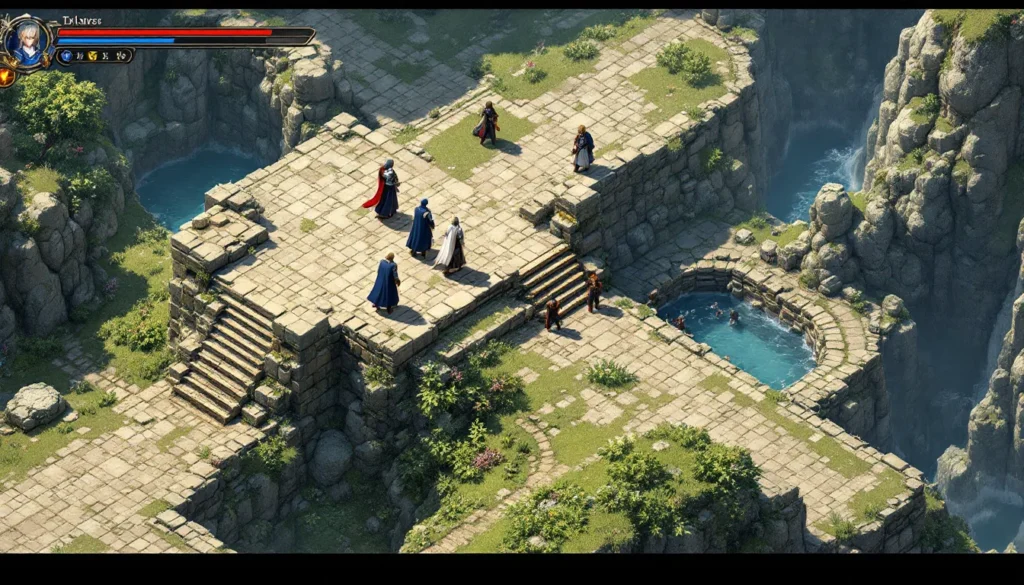
Battles happen on an isometric grid where terrain and elevation matter critically. It’s not just “attack the nearest enemy”, you need to think in three dimensions. Height gives you advantages: attacking from above deals bonus damage, while standing on high ground makes you harder to hit.
Terrain isn’t just cosmetic either. A Wizard standing in water takes bonus lightning damage. Rocky terrain slows movement. Water provides cover. Every square on the map has properties that affect gameplay. A seemingly simple encounter becomes tactical when you consider where your units position themselves.
Movement range depends on the character’s speed stat and job class. A heavy Knight moves fewer squares than a nimble Thief. This means positioning for the next turn matters, if you dash forward recklessly, you might end your turn where enemies can surround you. Smart players think three moves ahead: where will I be, where will enemies move, and can I prevent getting boxed in?
Ranged attacks can be blocked by allies in the line of sight. Archers need clear shots. Mages need positioning to maximize area-of-effect spells. This is why seemingly unimportant terrain tiles and NPC placement on the battlefield creates emergent strategy. You’re not just managing your party: you’re managing space itself.
Building Your Optimal Team Composition
Essential Job Classes and Their Strengths
Your core party needs balance, but there’s room for creativity. A functional team typically includes:
Tanks/Frontline: Knights and Paladins absorb damage and protect squishier units. A Knight with high HP and defense can hold an entire chokepoint, forcing enemies through a narrow corridor where you control engagement. Paladins add healing and status immunity, making them harder to remove from the board.
Damage Dealers: Monks and Dragoons provide physical DPS. Monks are insane, they deal massive damage per turn without needing weapons, making them independent and efficient with resources. Dragoons jump across the map dealing AoE damage, which is huge for crowd control. Wizards provide magical damage but trade durability for raw power.
Healing/Support: Priests are your primary healers. They’re not just ambulances, good Priests use debuffs, buffs, and resurrection spells that swing entire battles. Don’t sleep on Time Mages either: their haste and slow spells are criminally underrated for controlling the pace of battle.
Utility: Thieves steal items from enemies while providing debuffs and evasion. Calculators deal consistent damage regardless of positioning once you unlock them. Archers enable ranged physical damage without magic costs.
A safe core team for beginners might look like: One tank (Knight), two damage dealers (Monk + Wizard), one healer (Priest), and one utility unit (Thief). This gives you coverage for offense, defense, healing, and adaptability. Once you understand the mechanics, you can experiment with weirder compositions.
Party Balance and Early-Game Recommendations
During the early game, you’re severely limited in party size and unlocked classes. Ramza is forced into your party, so accept that and build around him. He’s perfectly viable as a melee damage dealer or tank depending on how you allocate jobs.
Your first recruitable units matter. Delita makes an excellent physical damage dealer thanks to his solid stats and easy access to strong equipment. Don’t recruit more than four party members immediately, you’ll unlock more flexibility as the game progresses, and spreading experience too thin hurts everyone.
Early bosses punish bad positioning more than underleveled stats. A properly positioned Knight blocking a corridor forces the enemy to engage in unfavorable circumstances. This is why team synergy matters from the start. You don’t need the “optimal” party: you need a party that works together.
Consider what the early boss encounters throw at you. If you’re facing a lot of physical attackers, lean into magic damage and positioning that prevents them from reaching your squishy units. If you’re fighting mages, stack magic defense and healers. Adaptability beats following a rigid composition template. Many guides recommending specific early-game teams ignore this crucial flexibility, your situation dictates what works, not some internet list.
Advanced Combat Strategies for Challenging Battles
Terrain Advantages and Height Mechanics
Veteran War of the Lions players abuse terrain relentlessly. A single cliff edge becomes a fortress. Enemies attacking from below suffer damage penalties while you benefit from high-ground bonuses. Certain encounters, especially scripted story battles, place terrain deliberately to teach this lesson.
Water and terrain types modify ability effects. A Wizard’s Firaga spreads differently on sand versus stone. Lightning spells hit harder in water. Air-based spells move differently depending on elevation changes. Once you internalize these interactions, you stop seeing terrain as background and start treating it as a weapon.
Height advantages compound over long fights. In a 10-turn battle, consistently attacking from high ground stacks +1 damage per hit. That’s +10 guaranteed damage across the fight, small per hit, massive in aggregate. Height manipulation also breaks enemy AI. Enemies often struggle to pathfind around complex terrain, getting stuck or forced into suboptimal positioning.
Advanced tactic: Use height to create impassable zones. Position a Knight at the top of a cliff facing downward. Enemies either spend turns climbing around or attack from below at a penalty. This delays their offense while you focus on eliminating their ranged threats first.
Ability Combinations and Skill Synergy
This is where War of the Lions becomes puzzle-like. Certain ability combinations create emergent strategies that the game doesn’t explicitly teach you.
Haste + Monk is a classic combo. A hasted Monk gets extra turns, which means extra attacks, which means massive damage output. Stack this with a Priest’s haste, and you’re dealing with a damage machine that takes minimal resource investment.
Slow + Wizard’s Time Magic is defensive. Cast slow on dangerous enemies to reduce their action frequency. Pair this with a Knight’s tanking to create a “lockdown” strategy where enemies physically can’t threaten your healing support.
Stealing + Weapon Swapping allows Thieves to steal weapons from bosses mid-fight, immediately lowering their damage output. This is less flashy than blowing them up with magic, but it works. Some bosses become trivial once disarmed.
AOE Spells + Choke Points multiplies damage. A Wizard casting Holy in a corridor where enemies bunch up deals more effective damage than spreading out. Manipulation of the grid forces enemies into positions where your AOE attacks hit multiple targets.
Status Effects + Boss Fights swing battles. Paralysis prevents enemy actions. Confusion makes enemies attack their own allies. Silence prevents mages from casting. Many boss encounters become manageable once you stack status effects, especially paralysis, which essentially removes the threat for a turn.
The beauty of War of the Lions is that synergies aren’t documented in-game, you discover them through experimentation. A combination that works in one battle might be useless against the next. This is where deep understanding separates veteran players from newcomers.
Leveling Up and Character Progression
Effective Grinding Methods and Experience Optimization
War of the Lions doesn’t force grinding, but smart players optimize it. Experience doesn’t distribute evenly, whoever deals the killing blow gets an EXP boost. This matters for powering up underdeveloped units without leaving them helpless in combat.
Certain story chapters feature battles that reset without progressing the narrative. These are goldmines for controlled grinding. Pick a mid-tier battle, farm it until your weakest unit catches up to the party average, then move on. Don’t over-grind though, War of the Lions scales difficulty with levels in subtle ways. A massively overleveled party might actually find later story battles easier mechanically but less engaging strategically.
Job experience works separately from unit experience. Abilities unlock as you use jobs, not based on level. This means a Wizard needs time casting spells to unlock magic tiers, even if the unit’s base level is high. Plan grinding to address both simultaneously, use that battle to level up while a unit with low job mastery gets time using their current class.
Late-game grinding becomes about ability acquisition and stat optimization. By the endgame, you’re not grinding for raw levels: you’re grinding to unlock specific abilities that create the build you want. This is why early game feels like “hit things until you’re stronger” while late game is “position units to learn the exact ability that solves this encounter.”
Ability and Spell Acquisition
Abilities unlock through job progression, not story events. Every class has a skill tree, use that job class enough, and you unlock new abilities. This system encourages experimentation because you’re not locked into one class forever: you gain abilities and can switch classes to learn from others.
Some powerful abilities sit deep in job progression. The top-tier Wizard spells require serious time invested in the Wizard job. Similarly, Time Mages need consistent use to unlock abilities like haste and slow. Don’t expect to unlock everything before endgame, be selective about which abilities you prioritize.
Certain hidden jobs require specific conditions. These aren’t story-locked: they’re reward-locked. Complete specific tasks, recruit specific units, or meet obscure requirements, and new job classes unlock. These hidden jobs sometimes break the game balance in the best way, acquiring them feels like discovering a cheat code.
Ability grinding pairs with character grinding but requires different resource allocation. You can be level 50 and still lack essential abilities if you haven’t spent time in the right jobs. This is intentional design, it prevents “optimal” builds from being accessible immediately, maintaining engagement throughout the playthrough.
Story Walkthrough Highlights and Key Missables
Major Plot Points and Character Development
War of the Lions’ story is deliberately complex, it deliberately withholds information and recontextualizes earlier events. Ramza’s journey from idealistic soldier to disillusioned veteran drives the narrative. The War of the Lions isn’t really about battles: it’s about how institutions exploit individuals, and how Ramza navigates surviving in a corrupt system.
Character recruitment happens at specific story moments, and some recruitable units only appear temporarily. If you miss the moment, they’re gone forever. This includes legendary warriors like Orlandu, one of the strongest units in the game. His story ties into the game’s larger themes about legacy and obsolescence, he’s powerful but haunted by his past.
The story has multiple paths and branching points, though not in the way modern games handle branching narratives. Your decisions influence which battles you fight and which units you recruit, creating a sense of agency even when the overall trajectory is fixed. The War of the Lions remake expanded this significantly compared to the original, with new story beats and expanded character arcs.
The ending is genuinely dark. It doesn’t wrap up neatly, instead, it questions whether Ramza’s sacrifices meant anything. This ambiguity is why the story resonates. It doesn’t preach: it makes you think about the implications.
Hidden Content and Optional Recruitment
War of the Lions has hidden classes, secret abilities, and recruitable characters that exist off the beaten path. Missing these doesn’t bar you from completing the game, but it fundamentally changes what’s possible in your playthrough.
Orlandu (also spelled Delita in some versions) is the most famous hidden recruit. He’s absurdly overpowered, his Holy Explosion ability trivializes most fights once you unlock him. Finding him requires interacting with the story at specific moments and recruiting him before a cutscene lock-out occurs. First-time players almost always miss him.
Soldier’s of the Glabados Church can be recruited if you meet specific conditions. These hidden recruits often represent different playstyles than your main party, expanding strategic possibilities. Some have unique abilities unavailable through normal job progressions.
Hidden job classes like Onion Knight unlock through beating specific challenges or meeting obscure requirements. These jobs are intentionally hidden because they’re either overpowered or require investment that casual players won’t pursue.
Throughout the story, optional recruitable units appear at specific moments. Recruit them during their availability window or lose the option permanently. The original Final Fantasy Tactics had fewer of these moments, but the War of the Lions remake expanded optional recruits significantly, rewarding players who explore and talk to NPCs. Since this game respects player agency, missing optional content isn’t punished, but discovering it later gives you something to chase in New Game+.
Common Challenges and How to Overcome Them
Difficult Boss Encounters and Strategies
Certain boss battles are designed to punish players who ignore the game’s core mechanics. Wiegraf in Chapter 1 is infamous for first-time players. He’s a melee fighter with high HP and significant physical damage. The trap: fighting him in an open arena with limited terrain. Solution: Move toward terrain that breaks line of sight. Force him to navigate around obstacles. Use healing liberally and focus damage on him rather than his mercenary allies, eliminate the support first, then gang up on the main threat.
Delita’s second encounter requires understanding status effects. He reflects physical damage, making direct attacks suicidal. Stack magic damage instead, especially status effects like silence or confusion. His AI also has patterns, once you recognize them, you can position to exploit his movement.
Later boss encounters like Belias demand understanding of weakness and resistance. Belias is weak to certain elements, use those elements, avoid others. The encounter also has environmental hazards and summon mechanics. Research the specific boss before fighting (resources like Push Square have detailed trophy guides that include boss strategy breakdowns), or experiment carefully to discover the pattern.
A universal strategy for tough bosses: Bring paralyze. Status effects that remove action economy, paralysis, petrify, sleep, break boss balance. They’re so powerful that certain fights become trivial once you land them. This isn’t cheese: it’s strategy. The game rewards understanding that sometimes preventing the enemy from acting matters more than dealing damage.
Resource Management and Equipment Optimization
Gil (money) is tight in the early game. You can’t upgrade everyone’s equipment immediately, so prioritize. Give your highest-damage unit the best equipment first, then your tank, then your support. Healing scales with unit stats, so a Priest with mediocre equipment still heals effectively.
Equipment provides stat boosts and ability access. Some weapons grant exclusive abilities, a Paladin with a specific sword gains access to special moves unavailable with other weapons. This means equipment choice isn’t purely numerical: it’s also about what techniques become available.
Consumables (potions, ethers, elixirs) are expensive early on. Don’t spam them healing minor damage, manage HP proactively. A Priest casting healing is free: buying potions costs Gil. Prioritize resources toward major battles, not every skirmish.
Chances are limited too, you can only carry so many items into battle. Early on, you’ll carry healing supplies. Later, you can afford to carry damage-focused items. Loadout strategy is understated but crucial.
Some players don’t realize that returning to shops between battles allows you to adjust equipment and loadouts. If you know a boss is weak to fire, equip fire-based weapons and spells before entering. This level of customization feels minor until you realize it’s the difference between a brutal 20-turn fight and a manageable 8-turn fight. The AI doesn’t adapt your loadout, you do, and that’s where optimization lives.
Final Thoughts and Recommended Next Steps
Final Fantasy Tactics: War of the Lions remains a masterpiece of tactical RPG design, and these fundamentals only scratch the surface of what’s possible. The game rewards mastery, players who understand positioning, ability synergy, and class mechanics will crush those who rely on stats alone.
Your first playthrough should be about exploration and discovery. Don’t stress about “optimal” strategies: embrace experimentation. Discover hidden recruits. Try unusual ability combinations. Fail against a boss and adapt. This is where the game’s brilliance shines, every failure teaches you something about the mechanics.
Once you finish the main story, New Game+ opens up with tweaked mechanics and difficulty adjustments. The Final Fantasy Tactics Art behind the game’s visual presentation deserves appreciation, the isometric aesthetic holds up beautifully even by modern standards. It’s not just functional: it’s genuinely beautiful.
For players seeking more tactical depth after War of the Lions, titles like Final Fantasy VI offer different mechanical approaches. Coverage of modern tactical RPGs appears on gaming outlets like Siliconera, which regularly reviews strategy games and JRPG releases.
The meta continues evolving as players discover new ability interactions and optimized builds. You’ve got everything needed to jump in, succeed, and discover your own strategies. War of the Lions isn’t a game you beat once and shelf, it’s a game that keeps revealing depth the more you engage with it. That’s what makes it timeless.


