
Table of Contents
ToggleFinal Fantasy Tactics Advance 2 stands as one of the most underrated tactical RPGs on Nintendo DS, delivering a deeper and more refined experience than its predecessor. Released in 2007 in Japan and 2008 internationally, FFTA2 refined the winning formula with expanded job systems, a more engaging story set in the world of Ivalice, and multiplayer functionality that kept the competitive scene alive for years. Whether you’re revisiting this classic or diving in for the first time on an emulator or original hardware, mastering Final Fantasy Tactics Advance 2 requires understanding its intricate mechanics, building a balanced clan, and adapting to the game’s infamous Law system. This guide covers everything from core gameplay systems to advanced strategies for dominating both campaign and multiplayer modes.
Key Takeaways
- Final Fantasy Tactics Advance 2 rewards strategic planning, positioning, and system mastery over reflexes, with turn-based grid combat where terrain, elevation, and unit placement determine battle outcomes.
- The Law system forces players to adapt team compositions by randomly prohibiting or restricting certain actions, preventing cookie-cutter strategies and encouraging experimentation across job classes.
- Recruiting a balanced early clan with a healer, physical attacker, and utility unit, then grinding AP through Rumble Battles and story missions, creates a foundation for campaign success.
- Final Fantasy Tactics Advance 2’s job system enables deep customization through hybrid class combinations—such as Ranger/White Mage or Sage/Black Mage—that create specialized roles and enable chain combos for exponential damage multipliers.
- Multiplayer Clan Wars demand meta knowledge and roster depth, requiring players to predict law rotations, scout opponent compositions, and prioritize speed and positioning on compact battle grids.
- Equipment optimization has greater impact than pure leveling, with endgame weapons like Masamune delivering 3.4x damage multipliers and making late-game boss fights surmountable through proper gear acquisition and stat prioritization.
What Is Final Fantasy Tactics Advance 2?
Final Fantasy Tactics Advance 2 is a tactical RPG that puts players in control of a Ivalician clan competing in the Clan Battles. Unlike traditional Final Fantasy entries, FFTA2 focuses on turn-based grid combat rather than linear storytelling, though it does feature a loosely connected narrative following the protagonist’s rise to clan supremacy. The game is playable on Nintendo DS (both original cartridge and flashcart emulation), and its strategic depth rivals titles in the Final Fantasy Archives that have defined the genre for decades.
The core appeal of Final Fantasy Tactics Advance 2 lies in its flexibility and replayability. Players recruit units, customize them across multiple job classes, and forge gear to create a clan capable of handling any opponent. The game tracks an extensive wiki of stats, abilities, and matchups, making optimization a legitimate path to victory. Unlike action-RPGs such as Final Fantasy VII, FFTA2 rewards patience, planning, and understanding game systems over reflexes. The multiplayer component, accessible via Wi-Fi or local wireless, adds competitive longevity that kept the community engaged years after release.
Gameplay Mechanics and Battle System
Turn-Based Combat and Unit Control
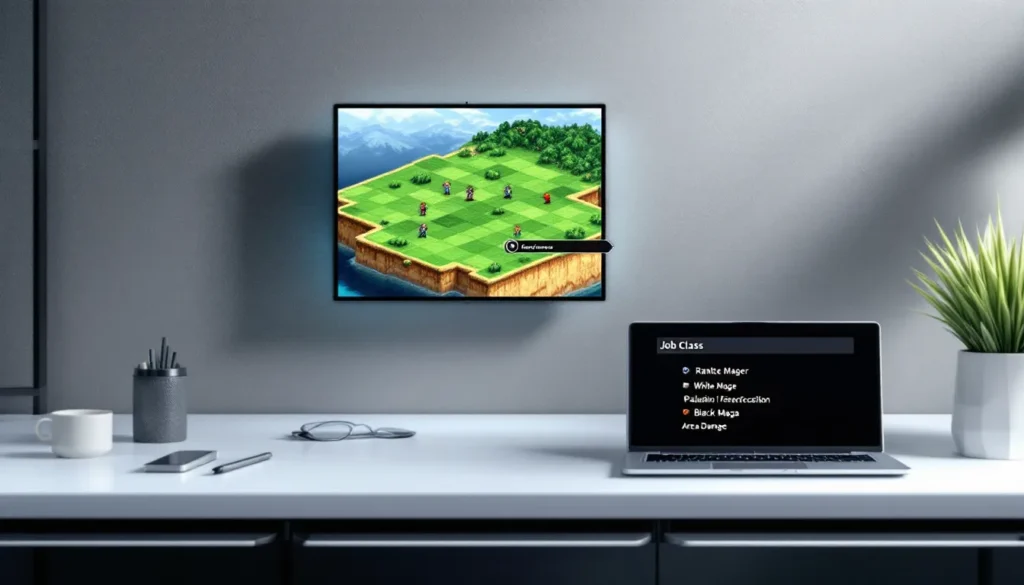
Battles in Final Fantasy Tactics Advance 2 happen on isometric grids where elevation, terrain, and positioning matter intensely. Each unit takes turns based on speed stats, and players must carefully position characters to maximize ability coverage while minimizing enemy counterattacks. Unlike real-time systems, every decision feels weighty, you can’t undo a badly positioned unit once your turn ends.
Movement range depends on job class and equipment. A slow, heavy armor-clad Paladin moves fewer squares than an agile Thief, but hits harder when they reach their target. This fundamental tension between mobility and damage output defines team composition throughout the entire game. Terrain effects add another layer: water slows units, cliffs block paths, and high ground grants accuracy bonuses. Understanding these interactions separates experienced players from those just hitting “attack” every turn.
Critical mechanics include:
- Action Points (AP): Each unit gains AP during and after battles, unlocking new abilities from their current job class. Grinding AP efficiently determines how quickly your clan scales in power.
- Chain Combos: When multiple units act near the same enemy, they trigger chain bonuses that multiply damage output. Building teams with overlapping positioning creates exponential advantage.
- Status Effects: Poison, sleep, confusion, and immobilization are powerful tools. Some jobs specialize in applying these, creating utility roles beyond raw damage.
Law System and Gameplay Rules
The Law system is FFTA2’s most polarizing feature and also its greatest design innovation. Before each battle, a random law activates that either prohibits certain actions (“no black magic”) or grants bonuses for specific behaviors (“holy damage +50%”). Breaking laws penalizes your units with stat reductions, making rule-breaking a calculated risk rather than a free upgrade.
Laws force adaptation and prevent cookie-cutter team compositions. A clan built entirely around white magic healing can’t function when healing is prohibited, players must develop contingencies. This encourages experimentation and keeps repetitive grinding from becoming mindless.
But, some laws are objectively brutal. A physical damage prohibition against a melee-heavy clan is punishing: a healing prohibition against an injured party borders on unfair. Smart players manipulate which units enter battle to dodge unfavorable law interactions. This meta-gaming aspect separates casual playthroughs from optimized runs. According to coverage on gaming news outlets, competitive FFTA2 players spend considerable time pre-battling in Rumble Battles specifically to scout law combinations before committing to clan wars.
Character Classes and Job System
Core Job Classes and Abilities
Final Fantasy Tactics Advance 2 features 23 job classes split across four races: Hume, Viera, Moogle, and Nu Mou. Each race has unique job options and stat distributions. Humes are versatile and well-rounded. Vieras specialize in physical damage and speed. Moogles excel at support magic and utility. Nu Mou dominate black magic, white magic, and temporal manipulation.
Core jobs available to all races include:
- Soldier (Hume): Entry-level melee class with solid attack and modest survivability. The gateway to Paladin and Dragoon paths.
- Archer: Physical ranged damage with lower stats but higher evasion. Transitions into Ranger or Sniper based on weapon specialization.
- White Mage: Pure healing and status curing. Essential for campaign progression. Limited offensive capability makes solo-ing risky.
- Black Mage: Elemental damage and utility debuffs. Vulnerable but deals explosive area damage.
- Thief: High speed and mobility with decent damage. Specializes in stealing items and applying minor status effects.
Each job unlock requires reaching 300 AP within a specific ability chain. For example, transitioning from Soldier to Paladin requires learning 300 AP worth of Soldier abilities first. This AP system gates progression naturally, players can’t access endgame jobs immediately, forcing them to master foundational classes and learn their tactical applications.
Abilities are the lifeblood of FFTA2 combat. Abilities include attacks, magic spells, buffs, and utility skills. A Paladin learns Holy Knight abilities that combine offense and defense. A Black Mage learns Wizard abilities for massive single-target magic. Learning multiple ability sets from different jobs creates hybrid loadouts, a unit trained as both White Mage and Thief can heal while dealing consistent physical damage.
Hybrid Classes and Advanced Combinations
Once players unlock advanced jobs (Paladin, Ranger, Dragoon, Sage, Mystic, etc.), team composition depth explodes. A Paladin trained as a secondary White Mage becomes an unkillable damage sponge with healing capabilities. A Ranger cross-trained as Archer gains area damage tools alongside single-target physical bursts.
The most broken combos in competitive play include:
- Ranger/White Mage: Combines long-range physical damage with healing. One unit covers offense and defense, freeing team slots for specialized attackers.
- Sage/Black Mage: Stacks elemental damage bonuses while maintaining mana-efficient casting. Late-game Sages deal 500+ damage per spell with proper setup.
- Moogle Gunner/Gadgeteer: Moogles have access to both Gunner (ranged physical) and Gadgeteer (area control) classes, enabling complex positioning tricks.
Balance-breaking combos exist, but casual players rarely access them due to the investment required. A Ranger at 300 AP represents roughly 10–15 hours of grinding. Cross-training to 600+ AP requires double that time. This time gate naturally balances the system, theoretically perfect team compositions take weeks to assemble.
Clan composition matters as much as individual unit optimization. A three-unit clan with Ranger, Sage, and Paladin covers damage, utility, and tanking respectively. Adding a fourth Thief creates flexibility for stealing high-value items during Treasure Hunts. Specialized compositions for specific battles (three White Mages for anti-damage debuffs, three Black Mages for pure offense) are viable but vulnerable to bad law draws.
Essential Strategies for Campaign Success
Early Game Progression Tips
The first 10 hours of Final Fantasy Tactics Advance 2 feel like a tutorial, but progression mistakes compound into late-game suffering. The initial tutorial missions lock you into preset units and laws, but once clan creation unlocks, decisions become permanent.
Recruitment strategy matters immediately. Your first recruits determine your clan’s trajectory. Grabbing a White Mage early is non-negotiable, healing determines survival in every mission. After securing a healer, recruit a second physical attacker (Soldier or Archer) and a third utility unit (Thief or Moogle). This core trio handles all early-game content.
Don’t stress about optimal job paths early. Focus instead on completing story missions and grinding AP through Rumble Battles. Rumble Battles are low-stakes fights where victory and defeat both grant AP, they’re the skeleton key to early progression. A two-unit Rumble Battle against single enemies lets you farm 10–20 AP per battle, snowballing into job unlocks surprisingly fast.
Equipment acquisition is critical. Early weapons like Iron Swords deal 18 damage, but Knight’s Sword (unlocked around mission 15) deals 35 damage, nearly double. Spending gil on equipment upgrades pays dividends that a pure AP grind doesn’t. Don’t hoard currency for later: investing in power gear immediately makes current battles easier and faster.
Law adaptation shows true skill. When a law prohibits your primary damage type, don’t panic, swap in units trained in secondary abilities. A Soldier with White Magic healing can replace your White Mage. An Archer trained as Black Mage can handle magic-focused laws. Building redundancy across your clan takes foresight but pays off massively.
Mid-Game and Late-Game Strategies
By mission 30–40, you’ll access advanced jobs and face significantly harder opponents. The campaign’s difficulty curve spikes dramatically here. Story bosses start hitting 150+ damage per turn, requiring tactical positioning and ability combinations rather than brute-force leveling.
Mid-game builds emphasize specialization. By now, you’ve invested enough AP to fully commit units to specific roles. A Ranger dealing 80+ damage per turn trivializes physical-immune enemies. A Sage with Black Magic abilities handles magic-resistant encounters. Three specialized units beat five mediocre ones: commit to excellence rather than spreading talent thin.
Ability prioritization shifts toward chain-friendly actions. Chain abilities, attacks that synergize with nearby units, multiply damage exponentially. Three units triggering a chain deal potentially triple damage to a single target. Building teams around chain potential (units with overlapping movement ranges and complementary ability types) transforms the mid-game.
Equipment optimization becomes obsessive in late-game. Individual items like Masamune (120 attack) or Wizard’s Rod (90 magic attack) provide massive stat jumps. Farming these from treasure hunts and boss drops becomes a side activity equal in importance to story progression.
Boss strategies in late-game require scouting. Before any major story fight, check enemy unit counts, job classes, and equipment via the clan roster. A boss with three Paladins and a Sage demands a completely different approach than a boss with two Archers and a White Mage. Failing to scout often results in unfavorable law draws making fights unwinnable, reload and re-scout to bypass this frustration.
Final-boss preparation involves maxing out your best units to 500+ AP and equipping them with endgame gear (Masamune, Grand Armor, Aegis Shield). The final dungeon is designed to punish underleveled clans. Spending 5–10 hours grinding before the endgame ensures a smooth victory rather than frustration.
Clan Development and Team Building
Recruiting and Organizing Your Party
Your clan size is limited to 20 units initially, expanding to 30 later in the game. This constraint forces roster management, every unit occupies a slot, so deadweight recruits are genuine liabilities.
Recruiting strategy depends on clan role. Tank units (Paladins, Dragoons) need high HP and defense stats. Damage units (Rangers, Sages) need high attack or magic power. Utility units (Thieves, Moogles) need speed and mid-range damage. Balance your initial roster with at least one unit covering each role.
Race selection impacts stat distribution:
- Humes: Balanced stats, easy job access. Safest recruitment choice for beginners.
- Vieras: Higher speed and physical attack, lower magic. Best for physical damage roles.
- Moogles: Lower attack, high utility job access. Strong in support roles but weak as primary attackers.
- Nu Mou: Highest magic power, lowest physical attack. Mandatory for black magic specialists.
Don’t recruits units on aesthetics or favoritism. Recruit based on stat needs. A Viera Ranger deals 40% more physical damage than a Hume Ranger due to base stat differences, this gap only widens as levels increase.
Organization requires systems thinking. Create a primary battle team of your four strongest units, leveling them to 400+ AP first. Once stabilized, develop a secondary team for specialized battles (Treasure Hunts, Rumble Tournaments). Reserve slots for experimental builds or niche units that counter specific threats.
Gear, Equipment, and Stat Optimization
Equipment defines unit viability more than anything except job class. A Ranger with Knight’s Sword deals 35 damage: the same Ranger with Masamune deals 120 damage, a 3.4x multiplier. Late-game progression is fundamentally about farming endgame gear.
Essential equipment paths include:
- Weapons: Farm Masamune (physical damage), Wizard’s Rod (magic), Holy Lance (hybrid damage) from story bosses or treasure hunts.
- Armor: Grand Armor and Brigandine provide defensive baseline. Specialist armor like Spiked Armor penalizes attackers, creating psychological deterrent effects.
- Shields: Aegis Shield provides the highest defense. Mythril Shield is solid midgame choice.
- Accessories: Speed-boosting items like Hermes’ Shoes are borderline broken on fast units like Rangers and Thieves. Elemental resistances via accessories counter specific magic threats.
Stat optimization targets vary by role:
- Physical attackers need high attack and HP. A Ranger with 90 attack and 220 HP dominates.
- Magic attackers need high magic power and reasonable HP. A 95 magic power Sage with 180 HP casts spells without dying immediately.
- Tanks need maxed defense and HP. A 75 defense Paladin with 280 HP absorbs punishment.
Ability load-outs interact with stat distributions. A Black Mage with high magic power but 100 HP is a glass cannon, one hit kills them. A Black Mage with lower magic power but 200 HP actually survives and retains value longer. Trading 5 magic power for 50 HP often improves practical performance.
Leveling past stat caps becomes pointless, once a Ranger hits 99 attack (hard cap), additional AP goes toward unlocking secondary job abilities rather than pure stat growth. Recognizing when your unit is “finished” prevents wasted grinding.
Multiplayer Mode and Competitive Gameplay
Clan War and Battle Mechanics
Multiplayer in Final Fantasy Tactics Advance 2 centers on Clan Wars, asynchronous battles where players submit a four-unit roster to fight against opponents’ clans. The system is elegantly designed for both casual and competitive play.
Unlike story mode where laws are random, multiplayer law selection follows specific patterns. Experienced players learn these patterns, predicting which laws will activate in tournament brackets. This predictability creates legitimate metagame strategy, team compositions shift based on anticipated law rotations.
Clan Wars mechanics:
- Four-unit battles: Smaller rosters than story campaigns force harder specialization. Every slot must pull weight: deadweight dies immediately.
- Stat scaling: All units auto-scale to level 50 regardless of actual clan level, eliminating gear-check advantages. Pure strategy and ability combinations determine winners.
- No EXP granted: Multiplayer battles exist solely for ranking and bragging rights. They don’t progress your clan.
- Bracket tournaments: Regular tournaments pit thousands of clans against each other, with rankings determining difficulty opponents.
Winning multiplayer requires understanding meta-game trends. At high levels, expect:
- Anti-healer compositions: Multiple units trained to disrupt White Mage healing. Confusing the healer or landing status effects that reduce healing effectiveness.
- Chain-focused lineups: Four units positioned to maximize chain damage output, overwhelming slower opponents before they execute their strategy.
- Tank-and-stall: Heavy Paladin/Dragoon frontlines stalling combat while support units grind favorable matchups.
Tips for Dominating Multiplayer Battles
Dominating multiplayer requires meta knowledge and roster depth. High-ranking clans maintain 10+ battle-ready units, swapping in specific counters based on predicted opponent compositions.
Core multiplayer strategies include:
-
Scout opponent clans before battles. Clan rosters are public. Know what you’re facing, three Rangers demands tanking strats: three Sages demands physical pressure.
-
Prioritize speed. In four-unit battles with limited space, whoever acts first gains tremendous advantage. Speed-stacked Rangers and Thieves dominate because they attack first, potentially eliminating threats before they act.
-
Master positioning on tiny grids. Multiplayer maps are smaller than campaign maps, forcing tighter positioning. A single unit blocking a chokepoint changes entire matchups.
-
Exploit law rotations. If tomorrow’s tournament features “no black magic,” don’t bring magic-dependent units. Pivot to physical rosters knowing opponents might over-commit to magic.
-
Build psychological deterrents. A Paladin with 90 defense and 280 HP visibly threatens damage-centric opponents. Some losses happen before battle even starts, opponents surrender when facing unwinnable matchups.
According to Nintendo Life coverage, competitive FFTA2 communities maintain spreadsheet databases of tournament laws, opponent rosters, and win-rates across specific matchups. This level of detail separates casual multiplayer from genuine competitive play. High-level clans spend weeks optimizing rosters for single tournaments, understanding that small adjustments (swapping speed boosters for defense items) swing 50/50 matchups into wins.
Common Challenges and How to Overcome Them
Difficult Boss Fights and Solutions
Story bosses in Final Fantasy Tactics Advance 2 scale aggressively. Early bosses are overcomeable through brute force: late bosses exploit weak team compositions ruthlessly.
Montblanc’s Clan Wars (roughly mission 20) kills unprepared players through pure stat advantage. Montblanc fields Moogles with specialized jobs and equipment your clan hasn’t accessed yet. The solution: skip the optional battle, grind 50+ AP on your primary units, then return with advanced job unlocks. Early-game rushing creates skill checks: patience converts them into free wins.
The Totema battles (story missions 50+) introduce summon-based opponents with 600+ HP pools. Standard damage rotations take 10+ turns to whittle them down, opponents counterattack every turn, potentially eliminating your units before victory. Solutions include:
- Specialization: Bring four units specializing in the same damage type. Three physical attackers + one Ranger dealing 1200 combined damage per turn reduces boss TTK (time-to-kill) to 3–5 turns, minimizing counterattack windows.
- Debuffs: Status effects like Power Break (reduces attack by 50%) trivialize boss damage. Layering multiple debuffs creates stun-lock scenarios where bosses can’t act effectively.
- Positioning manipulation: Draw bosses away from healing allies. Isolate their strongest unit: focus-fire it down, then regroup against weakened enemies.
The final boss is notorious for punishing level 99 grinding by introducing multiple high-HP enemies with synergistic abilities. The fight requires advanced unit composition and strategic discipline rather than pure stat checking. Solutions involve:
- Pre-boss preparation with optimal gear and 500+ AP primary units.
- Understanding enemy job classes and predicting their ability rotations.
- Adapting mid-battle when initial strategies fail (swapping units, changing ability priorities).
Leveling Efficiently and Grinding for Resources
APGrinding is the most time-intensive aspect of FFTA2. Reaching 500+ AP per unit for a four-unit clan requires approximately 100+ hours of gameplay. Optimizing this grinding determines whether campaigns feel paced or tedious.
Efficient AP grinding methods:
- Rumble Battles: Easiest grinding method. Two-unit clan vs. single-unit opponent grants 10–15 AP regardless of outcome. Repeat 50 times for 500–750 AP per unit.
- Story missions: Completing campaign missions grants reasonable AP (30–50 per mission) while progressing narrative. Mixing grinding with story progression maintains engagement.
- Tournament brackets: Tournament wins grant bonus AP (50–100 extra) compared to regular battles. High-level tournaments multiply rewards for experienced players.
Resource farming for equipment:
- Treasure hunts: Dispatch clans on treasure expeditions to farm gold and rare items. Successful hunts grant 500–2000 gil plus random equipment drops. Time-gated but lucrative.
- Boss repeating: Major story bosses drop specific rare equipment once defeated. Farm them by repeatedly entering dungeons if you missed drops initially.
- Auction house alternative: Some versions include NPC shops restocking equipment periodically. Check shops after major story beats for newly available gear.
Balancing grinding with gameplay prevents burnout. Spending 2–3 hours on pure AP grinding without story progression feels like work. Mixing Rumble Battles (10 minutes) with story missions (20 minutes) maintains momentum while accumulating resource gradually. IGN’s strategy guide recommends cycling between grinding and story roughly 1:2 ratio for optimal pacing, 1 hour grinding, 2 hours story.
Resource prioritization matters. Early-game should emphasize equipment upgrades (30% power increase) over AP grinding (15% power increase). Mid-game shifts toward AP as unlocking advanced jobs provides bigger returns. Late-game focuses on farming specific endgame gear (Masamune, Grand Armor) necessary for final bosses.
Legacy and Community Impact
Final Fantasy Tactics Advance 2 represents a peak in tactical RPG design that remains unmatched in handheld gaming. While the original Tactics Advance was groundbreaking, FFTA2 refined its formula so thoroughly that it aged better than most 2008 releases. The game’s strategic depth, modular job system, and multiplayer infrastructure created a title that sustained competitive communities for over a decade.
The community aspect can’t be overstated. Nintendo DS Wi-Fi connectivity enabled thousands of players to submit clan rosters into tournament brackets, fostering grassroots competitive scenes predating esports infrastructure. Players maintained detailed spreadsheets, wikis, and forum posts documenting optimal builds, law rotations, and matchup statistics. This level of engagement mirrors modern esports communities even though lacking professional structures or prize pools.
Modern emulation has resurrected FFTA2 in contexts the original developers never imagined. ROM communities, speedrunning communities, and nuzlocke variant communities (self-imposed challenge runs) have spawned fresh engagement with decade-old content. The game’s core systems remain balanced and challenging even after 18 years, testament to its mechanical excellence.
The final fantasy franchise continues evolving away from tactical gameplay, recent entries prioritize action systems and real-time combat. FFTA2 remains the definitive tactical Final Fantasy experience alongside the original Tactics on PlayStation. Gamers seeking strategic depth without needing cutting-edge graphics or processing power consistently return to FFTA2 for its gameplay substance, positioning it as an essential entry in the broader Final Fantasy legacy that outshines many modern spin-offs.
Conclusion
Final Fantasy Tactics Advance 2 demands mastery across multiple interconnected systems, job classes, equipment optimization, team composition, law adaptation, and positioning mechanics all contribute to success. There’s no single “correct” way to beat the game: flexible thinkers overcome rigid planners when unexpected laws shift battle conditions.
The journey from recruiting your first three units to assembling an endgame clan of specialized powerhouses takes dozens of hours but justifies the investment. Strategic depth keeps gameplay fresh even through repetitive grinding sessions. Multiplayer adds competitive dimensions for players seeking human opponents beyond AI challenges.
Whether you’re chasing campaign completion, competitive clan rankings, or simply exploring the rich tactical landscape FFTA2 provides, the foundation is consistent: understand your systems, adapt to constraints, and execute with precision. Veterans and newcomers alike find rewarding experiences here, a rarity for 18-year-old handheld games in an era where sequels and remakes dominate.
Start your clan journey today. The world of Ivalice awaits.


