
Table of Contents
ToggleWar of the Visions: Final Fantasy Brave Exvius (WotV) is a tactical RPG that blends strategic depth with Final Fantasy’s beloved universe. Released in 2019 and still thriving in 2026, this turn-based mobile title has carved out a dedicated competitive scene and a massive PvE community. Whether you’re a casual player grinding story mode or a hardcore competitor pushing arena ranks, understanding the game’s mechanics, meta shifts, and resource management is critical to progression. This guide covers everything, from fundamental combat systems to advanced team building and monetization strategies, so you can dominate both PvE content and competitive PvP.
Key Takeaways
- War of the Visions: Final Fantasy Brave Exvius combines tactical grid-based combat with strategic team building, rewarding players who master positioning, elemental synergy, and role-focused composition over raw stats.
- A balanced squad needs defined roles—tank, healer, and DPS units—with vision cards and materia optimization being as critical as unit selection for competitive progression.
- Arena climbing and raid success require understanding counter-meta tactics and debuff utility, as specialized abilities and crowd control often outperform blind meta-following.
- F2P progression is viable through patient resource management: save Visiore for guaranteed pulls on 2-3 must-have units annually rather than chasing every banner release.
- Avoid common beginner mistakes like summoning recklessly, neglecting healers, or spreading resources across too many units—instead focus on 4-5 core units and farm efficiently with a clear plan.
- Stay informed about balance patches and meta shifts, as unit viability changes seasonally; the WotV community actively shares strategies to help committed players optimize builds and progress.
What Is War Of The Visions: Final Fantasy Brave Exvius?
War of the Visions (WotV) is a tactical turn-based RPG developed by Square Enix and Gumi. It’s available on iOS, Android, and PlayStation platforms, making it accessible across mobile and console ecosystems. The game takes place in the Ardra continent and weaves together original characters with familiar Final Fantasy archetypes, all rendered in a stunning chibi art style that’s both charming and instantly recognizable.
At its core, WotV is a gacha game, you summon units (characters), equip them with gear and materia, and deploy them in squad formations across grid-based battlefields. The gameplay loop combines strategic team building with tactical positioning, elemental synergy, and vision card integration. Unlike many gacha games that rely purely on stats, WotV rewards players who understand positioning, range, and ability chains.
The game has two primary content pillars: PvE (campaign missions, raids, and events) and PvP (Arena and Guild Battles). The meta shifts regularly with balance patches and new unit releases, so staying informed about patch notes is essential. As of 2026, the community remains active, with consistent seasonal updates and limited-time events that drive engagement. The game’s longevity speaks to its depth, there’s always something to optimize, grind, or strategize around.
Core Gameplay Mechanics & Battle Systems
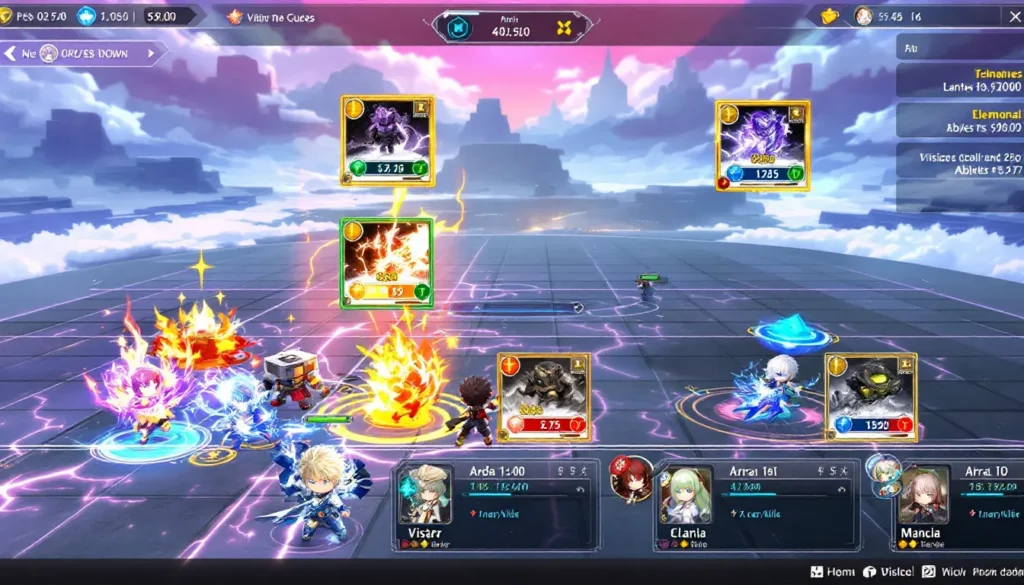
Turn-Based Tactics Combat Overview
WotV uses a turn-based system where unit speed determines action order. Initiative is calculated based on the unit’s AGI (Agility) stat and any relevant ability effects. Each turn, a unit can move (within range), cast an ability, or pass. Abilities consume AP (Ability Points), which regenerate each turn or can be manipulated through certain effects.
Attacks fall into several categories: physical (affected by ATK and enemy DEF), magical (affected by MAG and enemy SPR), and special abilities that ignore traditional defense mechanics. Critical hits factor in accuracy and crit rates, creating meaningful variance in damage rolls. The TTK (Time To Kill) metric matters here, understanding how many turns it takes to eliminate a threat informs both offensive and defensive positioning.
Status effects play a major role. Paralysis, silence, petrify, and charm can cripple units if you’re not careful. Resistances and immunity abilities become essential as you climb difficulty tiers. Chain reactions amplify damage when multiple units attack the same target in succession, rewarding coordinated offense.
Unit Positioning & Grid Strategy
Battles take place on grid-based maps. Unit positioning determines who can attack whom, how abilities chain, and whether you’re vulnerable to area-of-effect (AoE) damage. Range matters immensely, a ranged DPS positioned too far forward gets flanked, while keeping your tank too far back leaves squishier units exposed.
Movement range varies by unit type. Heavy tanks move slower but take more hits: speedsters cover distance quickly but die to focused fire. Understanding your formation before deployment is crucial. Many veteran players spend as much time planning pre-battle setup as they do managing the battle itself.
Height mechanics add another layer. Elevated positions grant defensive bonuses and can block line-of-sight for certain abilities. Some units have mobility abilities that exploit terrain, knowing which units can climb, teleport, or jump over obstacles is fundamental to high-level play.
Elemental Affinities & Weakness Exploitation
WotV features eight elements: Fire, Ice, Wind, Earth, Water, Lightning, Light, and Dark. Each unit has offensive and defensive elemental affinities. When a unit attacks with an element the target is weak to, damage increases significantly, typically 25-50% depending on the matchup. Conversely, resistance reduces damage.
Building a team with diverse elemental coverage prevents you from getting hard-countered. A Water-heavy composition struggles against Wind-dominant enemies. Matching elements also fuels ability chains and unlocks certain vision card effects, so elemental strategy intersects with team synergy.
Status resistances tied to elements matter too. A Fire-weak unit might also be vulnerable to burns, amplifying punishment. Smart players leverage multi-layered weaknesses, stacking elemental damage with debuffs and status effects to cascade damage and control the battle.
Building Your Optimal Team Composition
Tank, Healer, & DPS Role Essentials
Every effective squad needs defined roles. Your tank absorbs damage through high DEF/HP and abilities that draw aggression. Units like Engel or Frederica excel at protecting squishier allies. A tank without threat generation becomes irrelevant: prioritize units with taunts or abilities that punish attacking other targets.
Your healer keeps the team alive. This role requires high SPR (Spirit), AP efficiency, and ideally instant-cast or low-cast-time abilities. Ildyra and Raviesse are meta healers because they combine healing with utility, buffs, debuffs, or damage. Never overlook a healer: even a well-geared offense crumbles without sustain.
DPS units deal damage. Physical DPS relies on ATK and benefits from critical hit scaling: magical DPS prioritizes MAG. The best DPS units have AoE damage for clearing trash and burst potential for boss fights. Versatility matters, damage dealers who bring crowd control or debuffs extend their value beyond raw output.
A balanced 4-5 unit squad typically runs: 1 tank, 1 healer, 1-2 physical DPS, 1 magical DPS, and 1 flex unit (utility, sub-healer, or hybrid damage). Adjust based on content. Hard raid bosses demand tankier, more defensive squads: arena offense values burst and speed.
Top-Tier Units & Current Meta Picks
The meta shifts every season with balance patches and new releases. As of Q1 2026, several units dominate:
Physical DPS: Ardyn remains top-tier for his damage and debuff utility. Auron brings consistent crits and leadership: Elena offers range and elemental flexibility.
Magical DPS: Kilphe excels in AoE scenarios and elemental coverage. Ildyra doubles as healer and offensive magic dealer, making her incredibly valuable.
Tanks: Engel is gold-standard for draw tactics and durability. Ramada provides defensive buffs and elemental resistance management.
Healers: Raviesse combines healing with offensive support. Yerma offers pure healing with cost efficiency.
This list will shift as patches roll out. Always check patch notes on the official channels or community resources like Pocket Tactics for the latest tier discussions. The “best” unit is context-dependent, raid comps differ wildly from arena defenses.
Synergy & Vision Card Integration
Vision cards are passive equipment that boost stats and unlock special effects. They’re as important as units themselves. A unit without the right vision card underperforms dramatically compared to one with optimal cards.
Vision cards grant stat bonuses and trigger passive effects, attack speed boosts, elemental damage increases, or unique mechanics like “boost damage when attacking a paralyzed target.” Stacking complementary cards creates powerful synergies. Running Salire with both a critical-boost and critical-damage vision card amplifies her burst potential exponentially.
Team synergies extend to ability chains. When abilities chain (triggered by the same element or targeting the same enemy), damage multiplies. A fully chained combo can turn a close fight decisively in your favor. This is why team building isn’t just role-filling, it’s about crafting interlocking ability sequences.
Mastering PvE Content & Campaign Progression
Story Mode & Difficulty Scaling
WotV’s campaign spans multiple chapters with Normal, Hard, and Very Hard difficulties. Normal difficulty is a tutorial: it teaches mechanics without real punishment. Hard mode requires actual planning, you’ll face enemy compositions that punish bad positioning or sub-optimal gear. Very Hard is where strategy matters: enemies have enhanced stats, annoying mechanics, and multi-phased battles.
Story rewards include resources (Magicite, Gil, Shards), units, and equipment. Early-game progression is forgiving, but by Chapter 6+ you’ll hit difficulty walls if your team lacks depth. This is where grinding previous stages becomes necessary, you need better gear, higher unit levels, or additional squad members.
Equipment drops accelerate at harder difficulties. Farming specific story nodes for weapons or armor is a long-term investment but essential for optimization. Many veterans dedicate “farm days” to grinding specific story stages when new content opens.
Raid Bosses & Event Challenges
Raids are time-limited multi-stage battles against a single overpowered boss. They reset daily or weekly, offering limited attempts. Raid rewards scale with difficulty and damage dealt, incentivizing optimal team composition and strategy.
Raid bosses have mechanics, enraged phases, elemental weaknesses, or dangerous AoE attacks. Success requires understanding the boss pattern and crafting a team that either counters it directly or survives long enough to outdamage the healing. Multiplayer raid features let players tackle bosses cooperatively, but solo-focused content demands self-sufficiency.
Event challenges rotate constantly. These limited-time stages offer exclusive units, equipment, and materials. Events typically release a new unit and showcase it through event quests that grow progressively harder. Completing events feeds progression and rewards summon currency, making event participation a cornerstone of growth. Missing an event means losing access to that unit’s shards (needed for limit breaks) until a rerun.
Note: Event difficulty creep is real. 2026 events assume moderate gear and multiple built units. New players catching up need to prioritize older, easier events first before tackling current-season content.
Competitive PvP Strategies & Arena Rank Climbing
Arena Defense & Offensive Setups
Arena pits your defense team (automated) against attackers. You earn climb points for defense wins and lose them from losses. Climbing ranks unlocks better rewards and bragging rights. Your defense is passive, but it must hold against diverse offensive teams.
Defense composition prioritizes durability and threat. A squishy all-DPS defense bleeds points. Instead, anchor with a strong tank supported by fast DPS that can burst offensive threats before taking excessive damage. Healer inclusion on defense is debatable, some ranks favor pure offense, others need sustain. Test your defense: if you’re losing 50% of matches, adjust.
Offense, by contrast, is reactive. You see the opponent’s defense and build a counter. Facing a tank-heavy composition? Bring burst DPS and debuffers to overwhelm. Facing glass cannons? Prioritize crowd control and tanking. This flexibility is why building a diverse roster matters, you can’t climb high without multiple functional teams.
Offensive meta typically favors speed and burst. Fast units move first, eliminating threats before they act. Slowing or paralyzing the opponent’s DPS buys time for your tank to stabilize. Vision card choices matter, a speed-boosting card on your fastest unit can mean moving first in critical matchups.
Counter-Meta Tactics & Team Counters
The meta is cyclical. When one strategy dominates, counter-strategies emerge. Currently, if speed-based offense rules, expect defensive players to stack paralyze resistances and speed buffs. Understanding what counters your preferred team prevents tunnel vision.
Water DPS meta? Ice tanks and Water-resistant units surge in popularity. Dark mages dominating? Light-heavy comps see play. Reactive building is crucial, don’t just blindly copy top arena teams: understand why they work and what beats them.
Debuffs are underutilized in casual play but critical at higher ranks. A charm effect on your opponent’s tank forces them to attack allies. Silence disables spellcasters. Paralysis cripples speed-dependent comps. Units with debuff utility, like Salire or Shadowlynx, punch above their raw DPS because they control the battle state.
Viability isn’t binary. Units considered “outdated” can still climb if you leverage their niche strengths. A support mage might not top DPS charts but offers elemental coverage your team needs. Smart counter-picking beats blind meta-following every time.
Gacha Mechanics, Summoning, & Resource Management
Summoning Rates & Guaranteed Pulls
WotV uses a gacha system. Summoning requires “Visiore” (premium currency) or free currency. Rates vary by banner, but typically:** 5% SSR (gold rarity), 10% SR, 85% R (silver). These odds are brutal, expect long dry spells chasing a specific unit.
Banners rotate between weekly focus units. Limited banners feature time-restricted units: missing a banner means waiting months or years for a rerun. This FOMO (fear of missing out) is intentional, plan your summoning budget around units you genuinely want, not impulse pulls.
Guaranteed pull mechanics soften the blow. Every banner typically includes a guaranteed SSR after 200-300 pulls (varies by banner type). This safety net ensures you’ll eventually get the focus unit, but requires sustained resource investment. Many F2P players save for 6+ months chasing specific units, only summoning during guaranteed windows.
Rate-up percentages matter. A unit on “rate-up” appears in roughly 30-50% of SSR pulls. Off-banner SSRs are still possible, creating disappointment when you pull a unit you didn’t want. Smart summoning means understanding the exact rates for your target banner before committing resources.
F2P-Friendly Progression & Spending Optimization
WotV is playable free-to-play, but spending accelerates progression. F2P players can clear story, tackle most events, and climb arena, just slower than whales. The key is patience and smart resource allocation.
Free Visiore sources include login bonuses, event rewards, and story completion. Annually, F2P players earn enough free Visiore for 1-2 guaranteed pulls (200+ summons). This means choosing your summoning targets matters immensely. Chasing every new unit exhausts resources: instead, identify 2-3 must-have units per year and save exclusively for them.
Spending optimization for light spenders: battle passes (monthly passes) offer better value than raw Visiore. A $10-15 monthly pass grants consistent rewards and Visiore, accelerating progress without very costly. Avoid impulse 100 Visiore summons: they’re resource traps. Save for guaranteed windows instead.
Resource management extends beyond Visiore. Mats (crafting materials), Shards (unit limit-break items), and Equipment bottleneck progression as much as gacha luck. Farming events, grinding story stages, and trading in shops maximizes these resources. A well-planned farm route beats mindless grinding. Many players dedicate energy to daily “chores”, specific grinding targets, before tackling content they enjoy, ensuring steady progression.
The spreadsheet mentality separates efficient players from casuals. Track your resources, plan your spending, and execute. Discipline beats luck in long-term progression.
Advanced Strategies: Equipment, Materia, & Crafting
Gear Enhancement & Stat Optimization
Equipment is tiered (N, R, SR, SSR). Higher rarity doesn’t always mean better, context matters. An SR weapon with stats aligned to your unit’s strengths often outperforms an SSR weapon with misaligned stats. Always check the breakdown, not just rarity.
Enhancement boosts weapon stats through repeated refinement. An SR Sword enhanced 5 times exceeds a baseline SSR Sword in raw attack. Investing in gear enhancement is mandatory: you can’t compete with outdated equipment. Prioritize enhancing items used by your core units first.
Affinity crafting creates equipment tailored to specific units. Crafting an axe with fire affinity for a fire-focused unit multiplies its value. This system demands resources, materials and Gil, but high-end players craft gear specifically for raid bosses or arena seasons. It’s min-maxing at its finest.
Stat priorities depend on role:
- Tanks: HP, DEF, elemental resistances
- Healers: HP, SPR, cast speed
- Physical DPS: ATK, crit rate, crit damage
- Magical DPS: MAG, elemental boost, cast speed
Gear weight distribution matters. Over-investing in DEF for a DPS unit wastes resources: focus on their main stat (ATK or MAG) and add survivability only as needed. Theorycraft your builds before committing materials, the wrong enhancement is a sunk cost.
Materia Slotting & Board Builds
Materia grants passive stat bonuses and special effects. Each unit has limited slots: choosing which materia to equip is strategic. A unit needing crit rate gets crit-boosting materia: one vulnerable to paralysis gets paralysis resistance materia.
Materia combos unlock bonuses when multiple pieces synergize. Equipping three materia from the same set triggers a set bonus (e.g., +10% HP). These bonuses are substantial, rewarding thoughtful materia planning.
Unit boards are passive ability trees unlocked through leveling. Boards grant stat boosts and unlock latent abilities or ability enhancements. Fully maxing a unit’s board requires significant investment but transforms them, a maxed board unit vastly outperforms an unleveled one, even with identical gear.
Board priority: Core units (your main DPS/tank/healer) get priority. Secondary units can wait. Allocate resources to units you’ll use for at least 3-6 months: rotating squad members makes board investment inefficient.
Theorycraft tools (spreadsheets, simulators) help optimize materia and board builds. Don’t guess: calculate stat maximums and ability interactions before committing resources. Online community spreadsheets often have pre-optimized builds, reference them to avoid reinventing the wheel.
Monetization Model & Battle Pass Review
WotV’s monetization is fair by gacha standards but still aggressive. The game respects F2P players, you’re never forced to spend, but spending accelerates progression dramatically.
Visiore Pass (monthly): Costs roughly $4.99 USD. Grants daily Visiore, one-time rewards, and rank-up bonuses. This is the best-value purchase: even light spenders grab it monthly.
Battle Pass (seasonal): Around $19.99 for a full season. Grants exclusive cosmetics, resources, and premium currency. Battle passes accumulate slowly without premium payment, but the premium track expedites rewards. It’s optional but feels worthwhile for committed players.
Paid Summons: Spending Visiore on banners is the primary cost sink. $1 ≈ 100 Visiore. A guaranteed pull costs 200+ Visiore ($20+). Whales spend hundreds summoning multiple units: F2P players save for targeted pulls.
Cosmetics: Skins, limited-time gear, and cosmetic effects cost premium currency. They don’t improve performance but satisfy collectors. Cosmetics are truly optional, gameplay is never gated behind them.
Energy System: Stamina (called “AP”) refreshes over time or through spending. Refreshing AP costs Visiore. Most F2P players ignore refreshes, farming efficiently with natural regeneration. Competitive players refresh during events or raids, accelerating farm rates. It’s a convenience cost, not mandatory.
Compared to other gacha games, WotV monetization is reasonable. You aren’t forced into power-creeping through constant summons. A team built 1-2 years ago remains viable if updated slightly. The game rewards patience and smart spending, not whale status. This design philosophy has sustained the community through 2026.
Common Beginner Mistakes & How To Avoid Them
Summoning Recklessly: New players pull on every banner. Don’t. Identify 2-3 units you need and save exclusively for them. Free Visiore is limited: waste it once and you’re setting back progression by months.
Ignoring Vision Cards: Units without appropriate vision cards are gimped. Beginners often skip card enhancement and materia slotting. Invest in vision cards early, they’re as critical as unit stats.
Neglecting the Healer: The temptation to run 5 DPS units is real and loses consistently. A good healer enables your entire team to survive. Ildyra or any healing unit worth building makes progression smooth.
Spreading Resources Thin: New players level every unit they summon. Instead, focus on 4-5 core units initially. Building depth matters later: early, you need a functional squad. Don’t scatter materials across 15 mediocre units.
Skipping Story/Ignored Lore: WotV’s story is solid and rewards completion. Story chapters unlock equipment, units, and Visiore. Rushing to end-game content without story completion starves your resource generation.
Farming Inefficiently: Grinding story stages without a plan wastes energy. Identify exactly what you need (gear, shards, materials) and farm the most efficient node. Spreadsheets help here, many community resources track optimal farm locations.
Ignoring Balance Patches: The meta shifts constantly. A unit “useless” last season becomes viable after a buff. Conversely, meta units get nerfed. Pay attention to patch notes. Japanese gaming news sites like Gematsu often break Japanese game updates before global patches roll out.
Building Defense Wrong: Early players build glass cannon defenses and bleed arena points. Balance offense and durability on defense teams. A unit needs to survive long enough to attack, or it’s just dead weight.
Overcomplicating Builds: Sometimes simple works better than complex. You don’t need perfectly optimized materia from day one. A well-leveled unit with decent gear beats a poorly-built unit with ideal materia. Iterate as you learn.
Conclusion
War of the Visions stands out among tactical RPGs for its depth and longevity. Success demands understanding positioning, team synergy, resource management, and meta flexibility, qualities that separate committed players from casuals.
The path forward depends on your goals. Pushing arena rank requires a diverse roster and constant adaptation. Dominating raid content needs optimized single-squad execution. Casual story players benefit from patience and smart farming. Regardless of your target, the fundamentals remain: build a balanced team, invest in your core units thoughtfully, and respect the resource economy.
The meta will shift again. Units will be buffed and nerfed. New mechanics will emerge. But the strategic foundations outlined here, understanding positioning, leveraging elemental synergies, building role-focused teams, and optimizing gear, remain evergreen. Stay informed, farm consistently, and adjust tactically, and you’ll thrive in WotV through 2026 and beyond.
One final note: the WotV community is welcoming. Guilds, Discord servers, and content creators share strategies freely. If you’re stuck, ask. The game rewards learning, and the playerbase generally rewards curious newcomers with guidance. Jump in, take these strategies to heart, and enjoy the grind.


